


Robots Are Real—and They're Here Now: A Clinician's Perspective on Emerging Robotics in Orthodontics
For more than a decade, I have been convinced that robotics would find a meaningful place in health care. Long before the technology was ready, I was asking colleagues in the tech industry to help me identify a robot suited for an orthodontic office. The responses were underwhelming, so I started searching on my own.
Pepper Comes to the Office
My search eventually led me to Pepper, a humanoid robot developed by the French company Aldebaran Robotics, in partnership with SoftBank Group of Japan. Introduced in June 2014, Pepper was the first consumer-grade humanoid robot brought to market. It had limited mobility and was never designed to perform clinical tasks, but it was charming, interactive, and utterly captivating to everyone who encountered it.
Similar articles from the archive:
We brought Pepper into our practice, and the response was immediate (Fig. 1). Patients loved it. Parents filmed it. Colleagues talked about it. Whatever its functional limitations, Pepper demonstrated something important: people respond warmly and enthusiastically to robots in a health-care setting. That reaction planted a seed.
Inspired by what we witnessed, Todd Blankenbecler, Chester Wang, and I founded Zeeno Robotics* with the goal of developing and supporting robotics specifically designed for dental and orthodontic practices.
The Case for Robotics in Orthodontics
Conversations about robotics in health care tend to focus on a predictable set of applications: precision surgical assistance, space disinfection, patient transport, patient education and monitoring, medication delivery, and companionship for isolated or elderly patients. All of these are legitimate and evolving areas of development.
On the clinical frontier, robots are already making inroads. The Yomi Dental Implant Robot** is cleared by the U.S. Food and Drug Administration to provide robotic guidance for implant placement. In a preprint posted in June 2025, associates from Perceptive Technologies and the Harvard School of Dental Medicine reported the first documented in-human, semi-automated robotic crown preparation, with the procedure completed in 15 minutes to a precision better than 50μm (this work is early-stage and not yet peer-reviewed).1 Although the role of robots in direct patient treatment remains limited for now, we can expect more treatment-focused robots to become available. The more immediate and practical opportunity lies in practice operations.
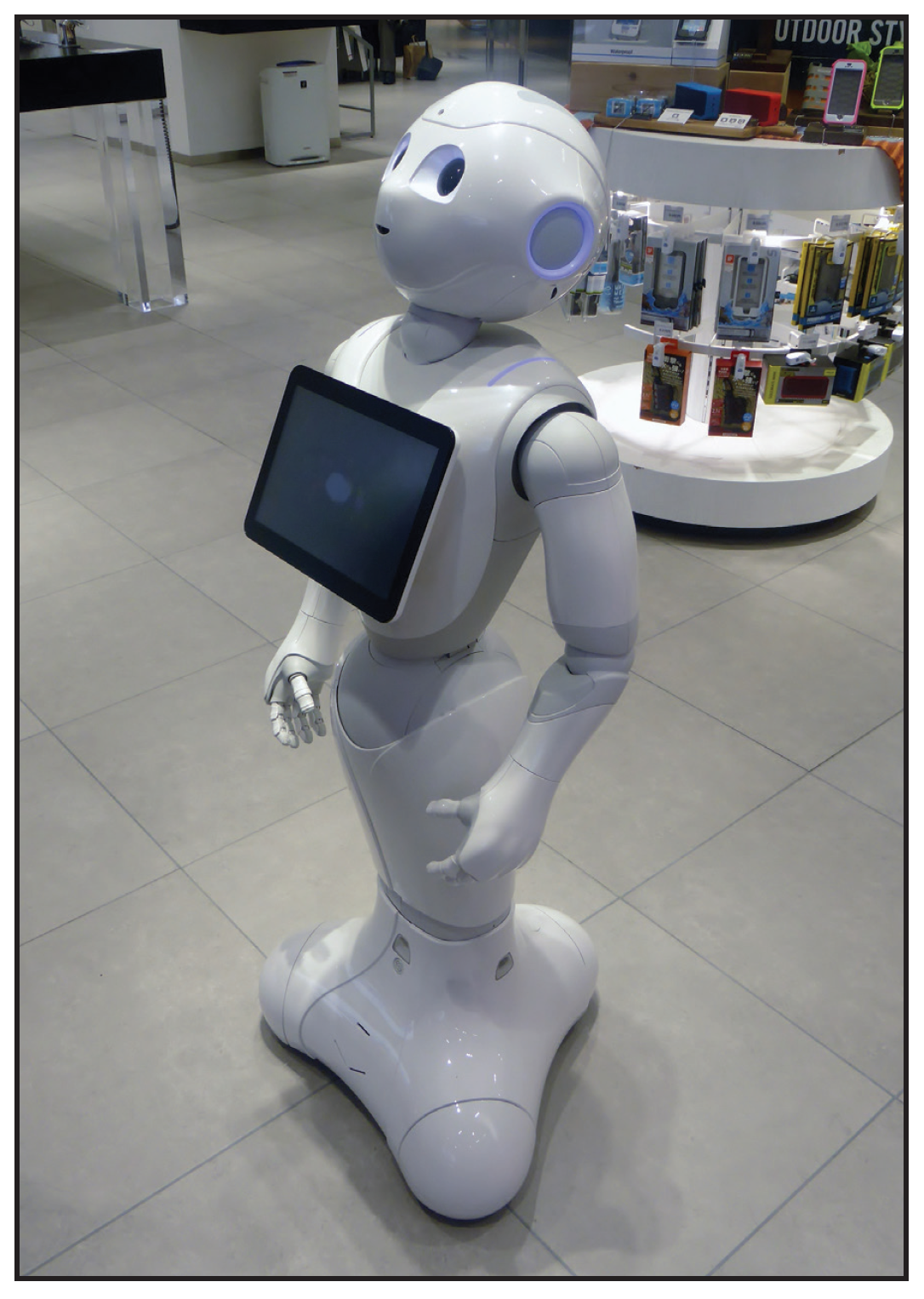
Fig. 1 Pepper humanoid robot, similar to the model demonstrated at Dr. Lemchen’s office.
Orthodontic practices are particularly well suited to robotic integration for several reasons. Our specialty places great value on the patient experience and interpersonal connection—and as it turns out, robots can contribute meaningfully to both. We also rely heavily on repetitive, time-consuming tasks such as sterilization, instrument transport, patient escort, check-in, and routine education. These are exactly the kinds of tasks that robots handle well and, frankly, tasks that clinical staff are often relieved to hand off during a demanding day.
The opportunity is amplified by the staffing issues encountered in recent years. Nearly 90% of dental practices report persistent hiring challenges, with more than half identifying staffing as a primary operational risk.2 Assistant turnover commonly approaches 25% annually, while replacing a staff member can cost from 50% to 200% of their annual salary, requiring months to restore productivity.3,4 Automation and robotics improve efficiency by handling routine tasks, allowing staff to focus on patient care. This benefit aligns with the reality that today’s health-care support roles are increasingly augmented by automation.5-7
It is worth reflecting on how technology adoption tends to work in health care. What begins as innovation quickly becomes expectation. Digital radiography, digital imaging, cone-beam computed tomography, digital scanning—each of these was once a novelty, then a differentiator, and eventually a standard of care. Robotics is following the same trajectory. The practices that engage early will establish a meaningful advantage; by the time adoption feels safe and obvious, the window for differentiation will have closed.
From Curiosity to Purpose-Built Solutions
After several years of working with commercially available platforms, we recognized that what the orthodontic profession needed was not a general-purpose robot adapted for dental use, but a system built specifically for this environment. That realization drove our software development—three full iterations across multiple robotic platforms—ultimately resulting in the Zeeno robot, which was designed and programmed specifically for orthodontic, pediatric, and general dental practices and has similar applicability across other health-care settings (Fig. 2).
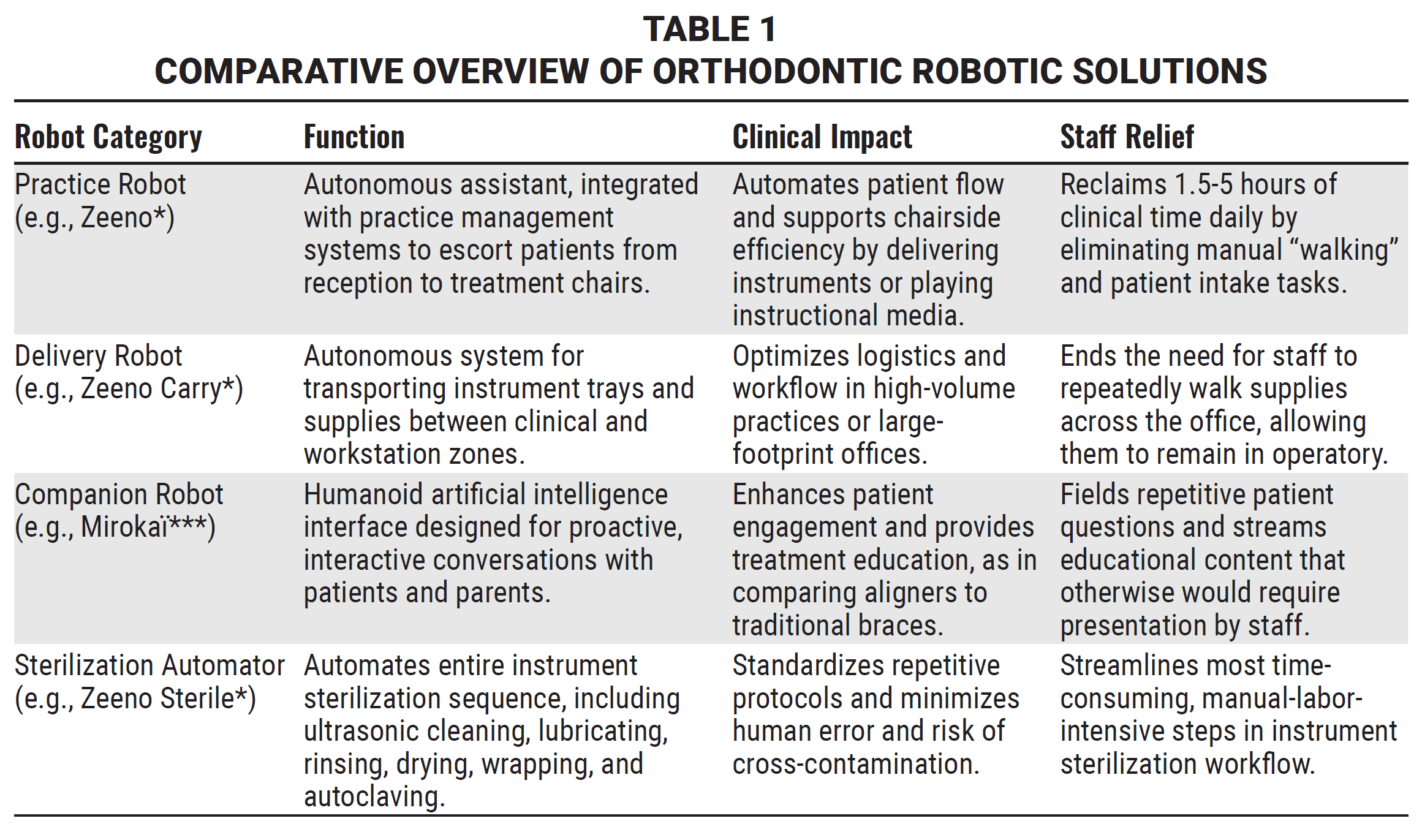
While general-purpose robots are widely available, they lack the specialized software necessary for a dental environment. By organizing these technologies according to their functional roles, practices can integrate them more effectively and thus return high-value time to clinical staff (Table 1). A purpose-built system allows for integration with existing management tools (like Dolphin Management†), transforming a “cool gadget” into a measurable operational asset.
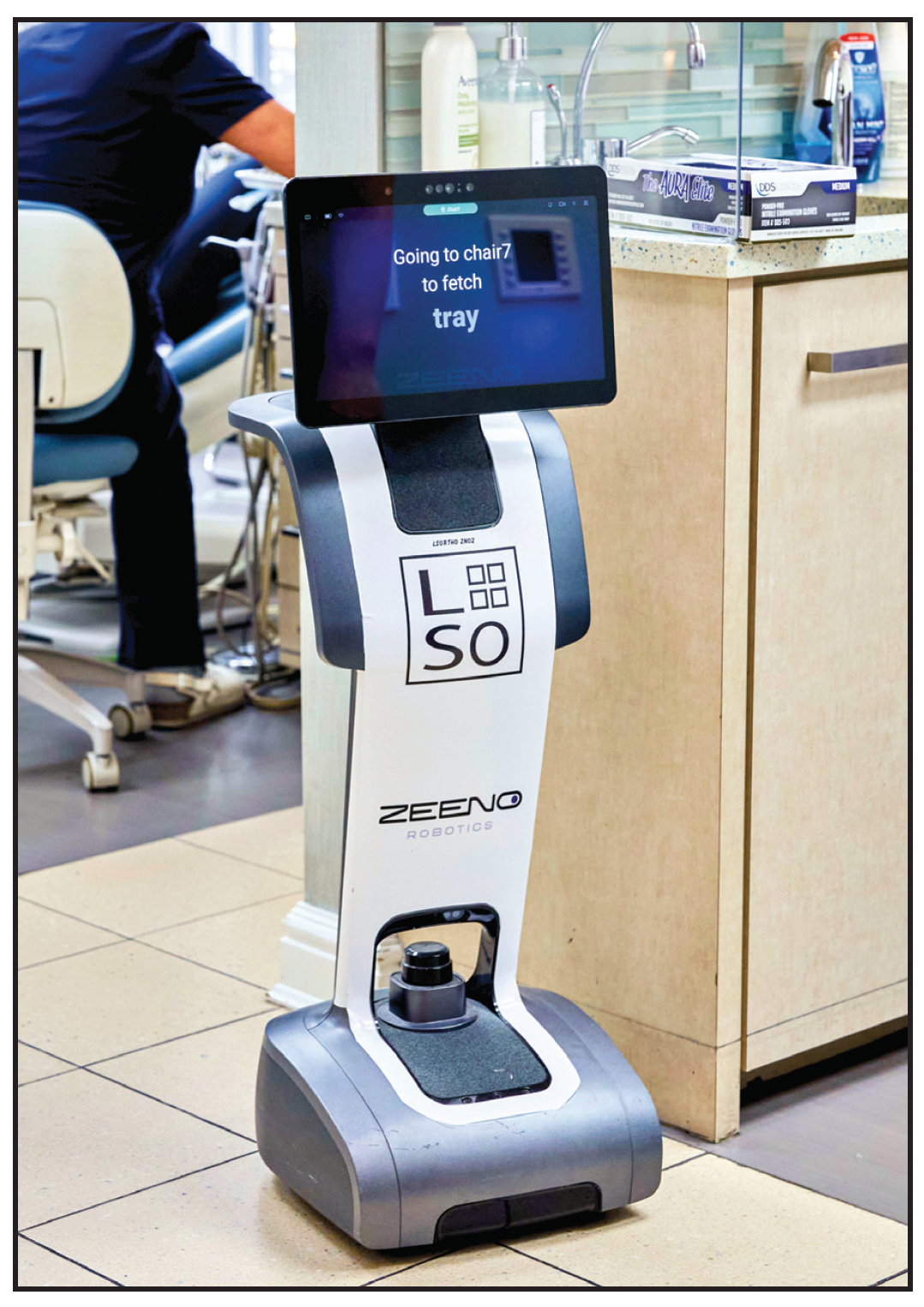
Fig. 2 Zeeno* robot performing autonomous tasks in author’s office.
Practice Robots
A practice robot is an autonomous clinical assistant that integrates with the practice management system and automates patient flow, escorting patients from reception to the operatory based on the daily schedule (Fig. 3). It can support chairside efficiency by delivering instruments and playing instructional media, allowing staff to remain focused on their patients. The Zeeno robot currently integrates only with Dolphin Management, but additional integrations are in development.
Delivery Robots
Typically deployed in high-volume practices and labs (and you may have seen them in restaurants), this autonomous delivery system manages the transport of instrument trays and supplies between clinical zones and sterilization, eliminating repetitive manual walking across large office footprints. An example is the Zeeno Carry* (Fig. 4).
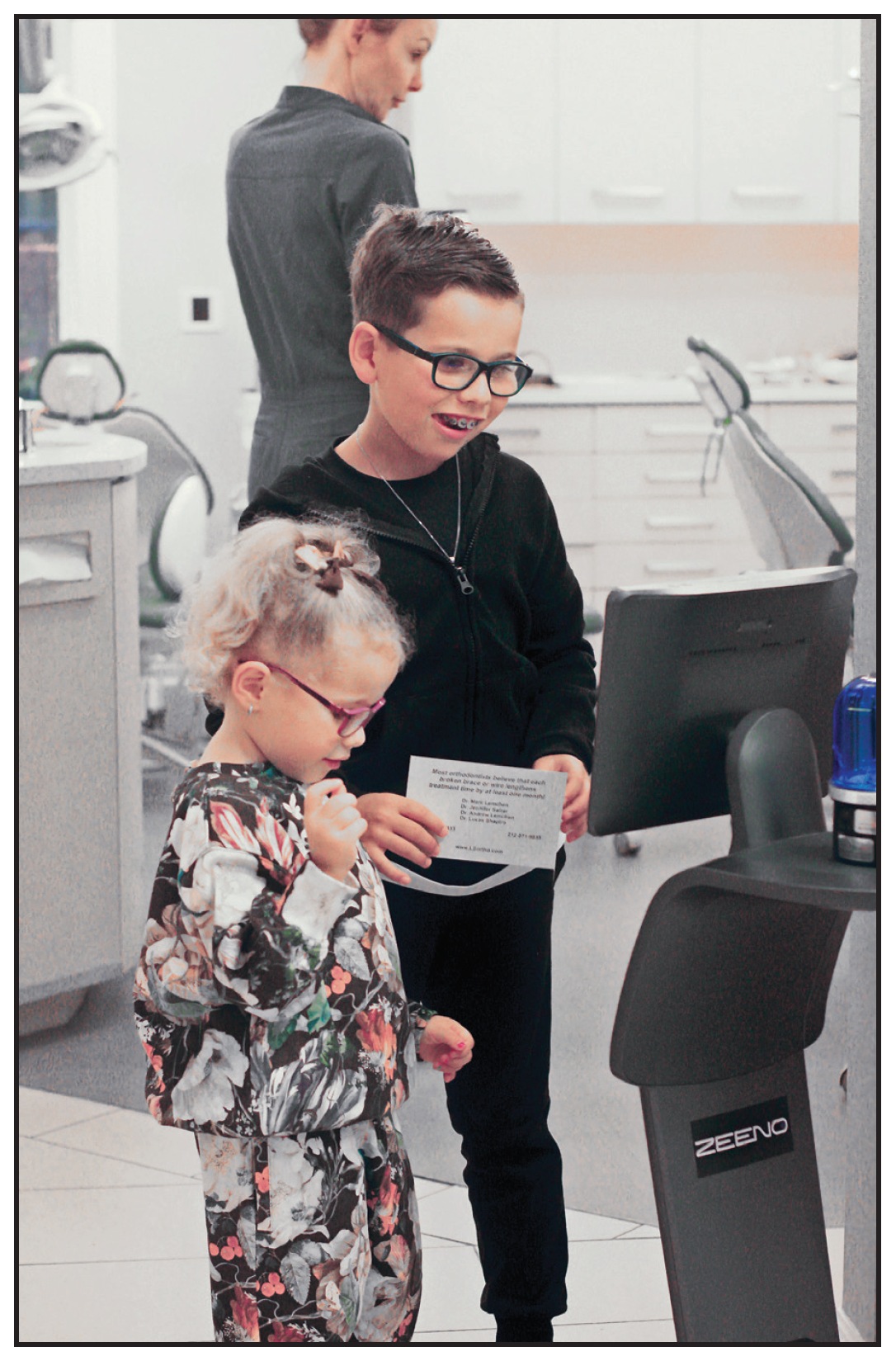
Fig. 3 Zeeno robot in clinical use.
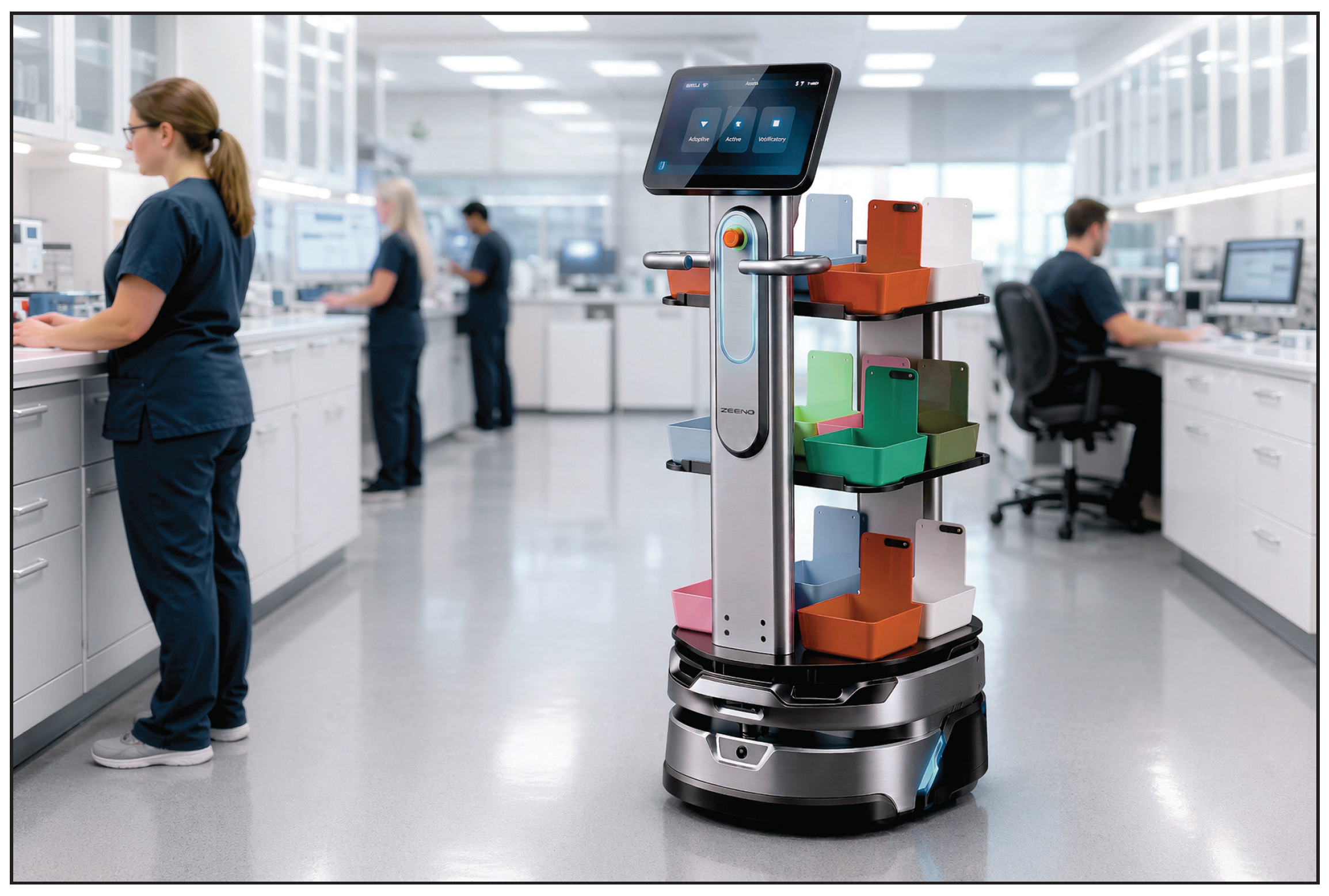
Fig. 4 Digital illustration of Zeeno Carry,* autonomous delivery robot for transporting instrument trays and supplies.
Companion Robots
This category of robots is designed to interact with patients and parents. They have advanced artificial intelligence (AI) and speech built in and are typically made in a humanoid form. In the case of orthodontic practices, they focus on patient engagement and education through proactive, interactive conversations. Zeeno’s entry in this category is the Mirokaï,*** developed by Enchanted Tools, which uses advanced navigation and “AI ears” to guide patients and support a technology-forward practice environment (Fig. 5). It is currently in development for 2027.
Sterilization Automator
Zeeno Sterile* is a workflow automation system in a unique robotics category pioneered by Zeeno (Fig. 6). It integrates with standard sterilization devices to automate the entire sterilization workflow—including ultrasonic cleaning, lubricating, rinsing, drying, wrapping, and autoclaving—while standardizing repetitive steps, minimizing human error, and reducing the risk of cross-contamination.
The AI Behind the Robots: Stella
All Zeeno robots are powered by an AI assistant called Stella. Stella is built on current large-language-model technology, including ChatGPT‡ and Gemini.†† She can converse naturally with patients about orthodontic treatment, explain the differences between aligners and traditional braces, answer questions about what to expect during treatment, and even tell a joke. Stella is configured with built-in guardrails that prevent responses to inappropriate topics; practices can further customize her behavior through a dedicated setup screen to specify, for example, that she answers only dental-related questions, tells only dental-themed jokes, or limits responses to two sentences.
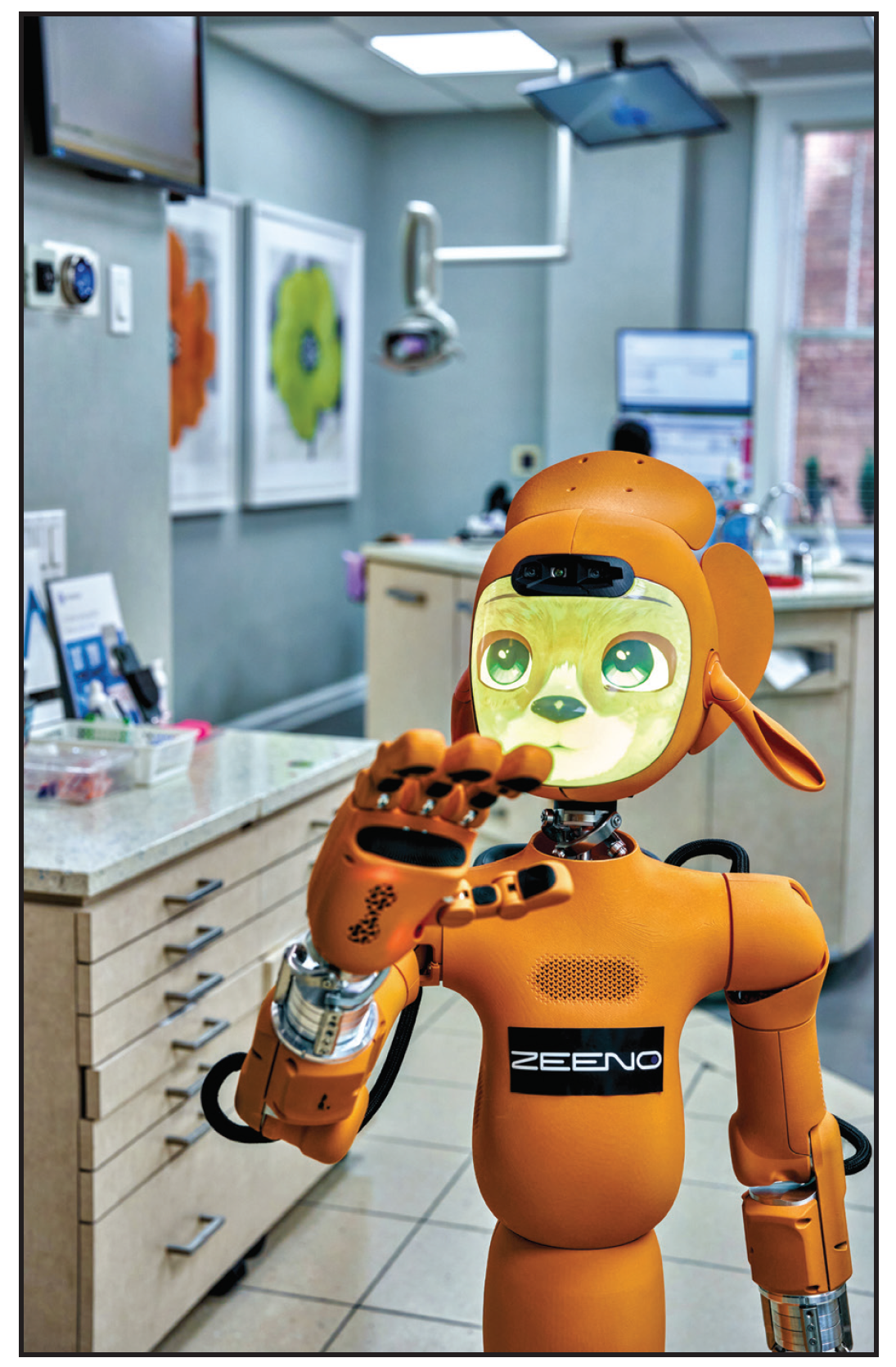
Fig. 5 Digital illustration of Mirokaï,*** companion robot designed for interactive patient engagement and education.
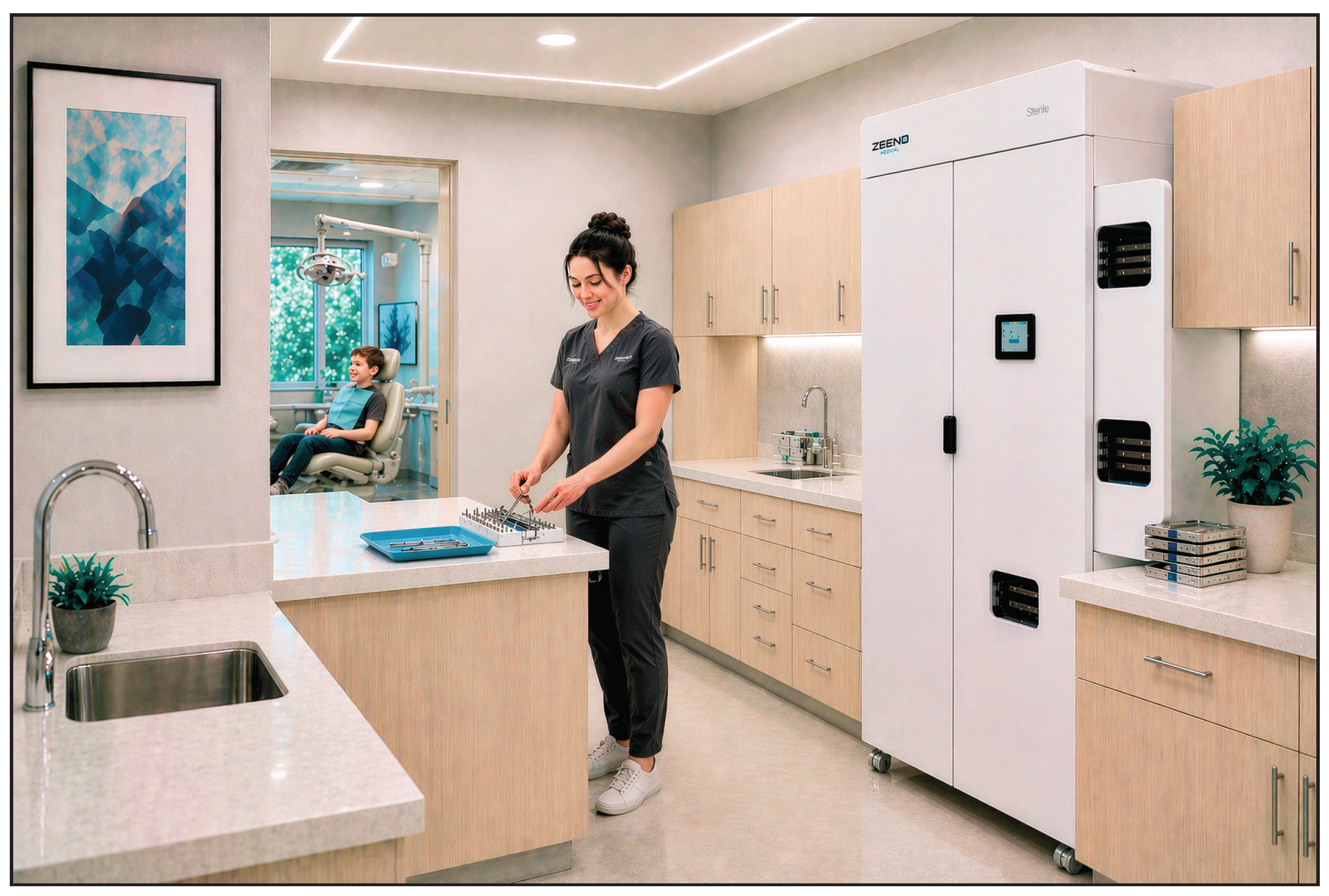
Fig. 6 Digital illustration of Zeeno Sterile* robotic system for automating instrument sterilization workflow.
Where Robotics May Not Fit
Because robotics is not a universal solution, implementation can fail when forced into the wrong environment. Low-volume practices may lack the task density to justify the investment, while boutique practices may find automation at odds with a highly personalized patient experience. Physical constraints—such as multilevel layouts, closed doors, tight corridors, or unreliable Wi-Fi—can introduce persistent technical friction. Just as important, adoption requires leadership; without a committed staff “champion,” training and cultural resistance can quickly turn a promising tool into expensive shelfware rather than an operational asset.
A degree of skepticism is therefore both expected and appropriate. Up-front costs, workflow disruption, and staff hesitation are real considerations, and initial implementations may fall short without proper integration and training. Robotics is not a plug-and-play solution, but a strategic operational decision that demands realistic expectations and deliberate execution.
What Is the Return on Investment?
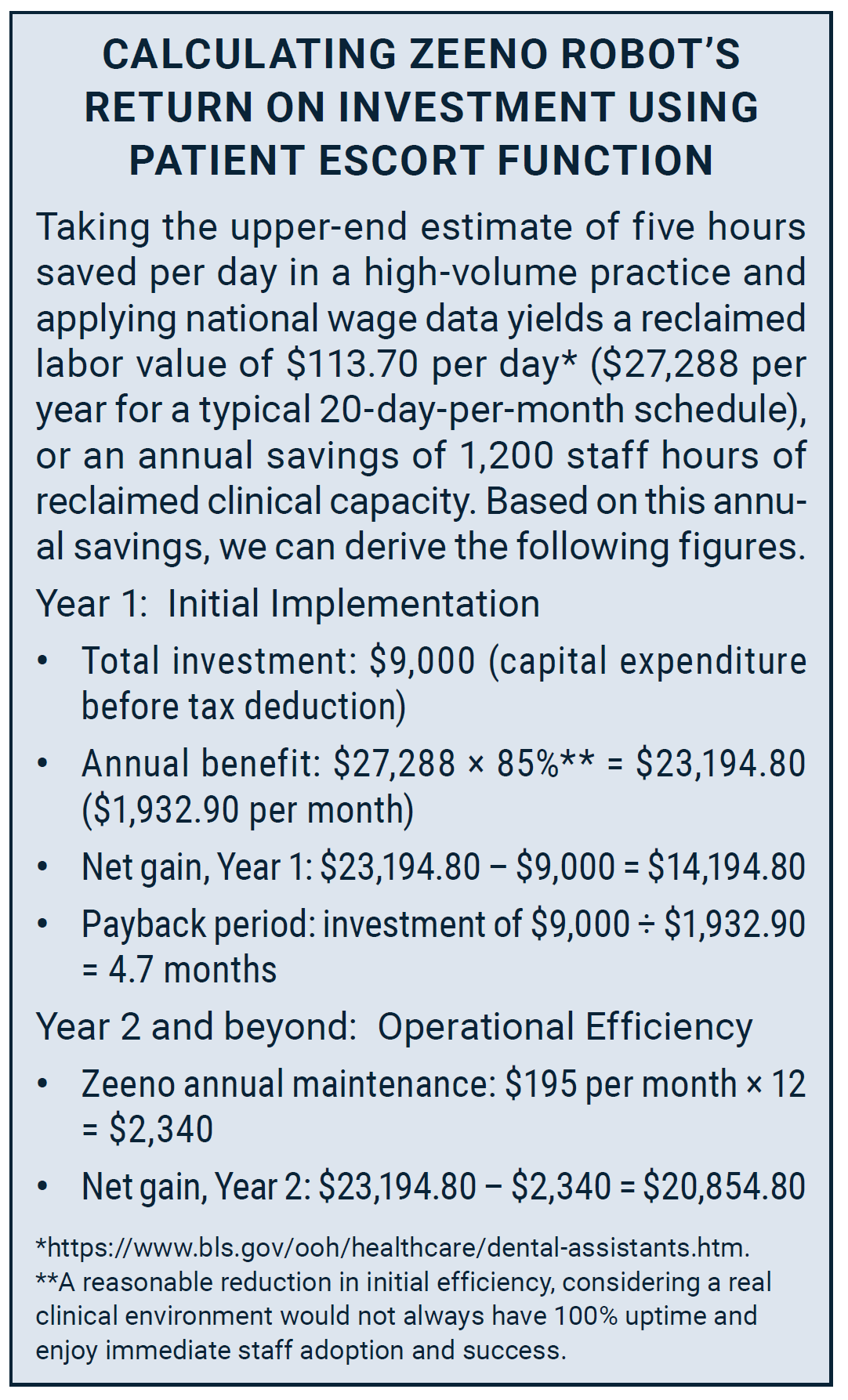
This is invariably the first practical question, and it deserves a direct and concise answer. Consider the example of the robotic patient escort function. The robot serves as an autonomous clinical escort, navigating the office floor to lead patients from the waiting area directly to their assigned treatment chairs. This eliminates the constant “walking” tasks that pull assistants away from clinical duties and allows the team to stay focused on high-value chairside care while modernizing the patient’s entry into the clinical space.
In our practice, a robot escort takes roughly 2.25 minutes: about one minute to travel to the reception area, 15 seconds to announce the patient, and another minute to walk the patient to the treatment area. During that time, the clinical assistant remains at the chair, preparing for the appointment rather than navigating a crowded waiting room and possibly being interrupted. If an office completes 60 escorts in a day, that represents about two hours and 15 minutes of time returned to direct patient care. In practice, we find the observed gains can vary widely depending on workflow design, typically ranging from 1.5 to five hours per day in high-volume settings. Of course, if a patient is anxious and needs a human touch during the escort, the advantage evaporates.
Using the upper-end estimate of five hours saved per day, and applying a typical practice schedule and national wage data, yields a reclaimed labor value of more than $27,000 per year (see accompanying box), or an annual reclaimed clinical capacity of 1,200 staff hours. The practice can refocus those recovered hours into billable patient care, such as chairside setup and active treatment support.
Beyond escorting patients, robots can save measurable time delivering instruments, transporting trays, fielding repetitive patient questions, and streaming educational content that would otherwise require staff to stop and make a presentation. The cumulative effect across a full schedule is substantial.
There is one other dimension of value that is genuinely difficult to quantify: the impression a robot makes on new patients and their families. One mother, upon walking into our office for the first time and seeing Zeeno in the reception area, said simply, “I knew this was the office for me.” That response is not unusual. Our patients have started asking specifically about the robot. Videos of Zeeno have circulated on social media. We became known—informally but effectively—as “the robot office.” That kind of organic differentiation is worth something, even if it resists being entered into a spreadsheet. In a few years, not having automation may seem as antiquated as paper charts.
Practical Considerations
Robots of this type are commercially available today. The purchase price, along with an optional annual service and software plan, varies by configuration; the figures used in the accompanying box reflect one current example. Based on those assumptions, and counting only the escort-related labor savings, the payback period is less than five months, with a net benefit of roughly $21,000 in the second year. That calculation does not account for the robot’s other functions, nor the cost of staff burnout and turnover. More important than the financial figures, in my view, is what the technology makes possible: assigning routine tasks to a robot allows a practice to “upskill” clinical assistants into higher-value patient-care roles, where long-term practice growth resides.
Implementation of a Zeeno robot follows a streamlined process coordinated remotely by the Zeeno team, though on-site options may be available. During this phase, the robot is connected to your local Wi-Fi, and its LiDAR (light detection and ranging) sensors are used to perform a two-dimensional mapping of your office, identifying operatories, reception areas, and sterilization rooms. Your team is introduced to the Zeeno Robot software, where you can command specific tasks such as escorting patients, fetching instrument trays, training the AI with your practice’s specific information, or organizing your educational videos.
Zeeno Robotics is at present focused exclusively on developing robots, robotics solutions, and software for the orthodontic practice environment. To see these robots in action, I welcome any of my colleagues to visit our practice in New York City or to contact other practices in North America that are currently using the robots.
Looking Forward
We are only at the beginning of a significant development for the orthodontic profession. The robots available today are already capable, useful, and—perhaps most important—genuinely welcomed by patients and families. The technology will only improve from here: more autonomy, more integration with practice management systems, broader clinical utility.
It is important to emphasize that robotics does not alter the fundamentals of orthodontic treatment. Diagnosis, treatment planning, and clinical execution remain unchanged. Robotics functions instead at the level of workflow—improving consistency, reducing interruption, and supporting the clinical team.
As robotics continues to evolve, its capabilities will expand, and integration will become more seamless. As management consultant Peter Drucker once noted, “The greatest danger in times of turbulence is not the turbulence—it is to act with yesterday’s logic.” The incorporation of robotics into orthodontic practice may represent one such transition point.
Robots are no longer experimental; they are functional tools capable of contributing to the orthodontic environment today. In other words, robots are real—and they’re here now.
FOOTNOTES
- *Zeeno Robotics, Atlanta, GA; www.zeenorobotics.com.
- **Neocis, Miami, FL; www.neocis.com.
- ***Enchanted Tools, Paris, France; enchanted.tools.
- †Dolphin Imaging and Management Solutions, Chatsworth, CA; www.dolphinimaging.com.
- ‡OpenAI, San Francisco, CA; www.chatgpt.com.
- ††Google Inc., Mountain View, CA; www.gemini.google.com/app.
REFERENCES
- 1. Ciriello C, Gallucci G, Getto P, Doeringer J, Rosen J, Pala K. First in-human intervention using a semi-automated robot for tooth restorative treatment. Res Sq [preprint]. 2025 Jun 3:rs.3.rs-6455412. doi: https://www.doi.org/10.21203/rs.3.rs-6455412/v1
- 2. American Dental Association, Health Policy Institute. Dental workforce shortages: data to navigate today’s labor market. October 2022. Accessed May 19, 2026. https://www.ada.org/-/media/project/ada-organization/ada/ada-org/files/resources/research/hpi/dental_workforce_shortages_labor_market.pdf
- 3. Dental Assisting National Board. What dentists should know about retaining dental assistants. January 15, 2025. Accessed May 19, 2026. https://www.danb.org/news-blog/detail/blog/what-dentists-should-know-about-retaining-dental-assistants
- 4. Society for Human Resource Management. The myth of replaceability: preparing for the loss of key employees. January 21, 2025. Accessed May 19, 2026. https://www.shrm.org/executive-network/insights/myth-replaceability-preparing-loss-key-employees
- 5. Gownder JP. AI and automation will take 6% of US jobs by 2030. Forrester. January 13, 2026. Accessed May 19, 2026. https://www.forrester.com/blogs/ai-and-automation-will-take-6-of-us-jobs-by-2030
- 6. KMS Technology. Healthcare automation: key applications and future trends. Accessed May 19, 2026. https://kms-technology.com/blog/automation-in-healthcare
- 7. World Economic Forum. Future of jobs report 2025. January 7, 2025. Accessed May 19, 2026. https://www.weforum.org/publications/the-future-of-jobs-report-2025/digest
-
 DR. LEMCHEN
Dr. Lemchen is the Technology Editor of the Journal of Clinical Orthodontics and, since 1974, has maintained a private practice in New York City at Lemchen Salzer Orthodontics, 553 Park Ave., New York, NY 10065; email: marclemchen@gmail.com. A Diplomate of the American Board of Orthodontics and a Fellow of the American College of Dentists, he serves as a Senior Attending Orthodontist at New York-Presbyterian Hospital, New York City, and as a Clinical Assistant Professor at Cornell University Medical College, New York City, and Tufts University School of Dental Medicine, Boston. Widely recognized as a pioneer in digital orthodontics, Dr. Lemchen was the founder of Dolphin Imaging and Management Solutions and has since cofounded several industry-leading technology companies, including EasyRx, CADflow, and Zeeno Robotics, LLC, where he currently serves as a partner and clinician. He holds numerous patents in the fields of imaging, three-dimensional software development, and orthodontic mechanics. In 2020 and 2026, he was a recipient of the AAO Ortho Innovator Award for his contributions to the specialty.