


BJORN LUDWIG, DMD, MSD
SEBASTIAN BAUMGAERTEL, DMD, MSD
S. JAY BOWMAN, DMD, MSD, editors
188 pages, 477 illustrations. $185. 2008.
Quintessence Publishing, 4350 Chandler Drive, Hanover Park, IL 60133.
(800) 621-0387; www.quintpub.com.
Any textbook introduced by one of the world's most respected orthodontic scholars, Lysle Johnston, must live up to rather eminent expectations. This book does. It's an elegant publication that will guide both the clinician and the educator in the use of mini-implants for skeletal anchorage.
The authors begin with a discussion of the concept of skeletal anchorage, carefully reviewing the advantages and disadvantages of various designs of the mini-implant head, collar, and screw. This is an important introductory chapter, since there are as many designs as there are manufacturers, who generally proclaim their own products' superiority without explaining their rationale for choosing one design over another. The section concludes with tabular information on all major mini-implants available at the time the book was written.
The next chapter is a review of insertion instruments and how to use them, including the authors' recommendations based on their evaluation of mini-implant design elements. This informative section will provide excellent material for instructors.
The authors then move into the obligatory section for any book of this kind: a manual of mini-implant placement. The practical presentation is enhanced by superb clinical images and diagrams. "How and when to use" tips are illustrated by a number of mini-implant cases, containing useful information for both scholars and practitioners. The book continues with fine points of implant usage, including medical and patient conditions that may need attention, risks, and system-related factors. Appropriately, caution is emphasized. But the jewel of this crowning achievement is a segment of the final chapter, aptly titled "A spike in the ice". Although it comprises a series of clinical cases, accompanied by helpful ideas and pointers, the section never drifts away from a scientific approach.
Similar articles from the archive:
- BOOK REVIEWS Biological Mechanisms of Tooth Movement January 2010
- BOOK REVIEWS Orthotads: The Clinical Guide and Atlas January 2008
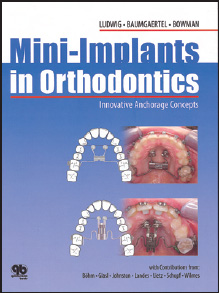
I believe this is the best book available on the subject, beautifully illustrated and logically organized. There are no wasted sentences, no flowery or overly clever commentaries; everything in the book serves a specific purpose. It is highly recommended as a required textbook for teaching mini-implants to orthodontic residents, and every dental-school library should carry a copy.
ORHAN C. TUNCAY, DMD