



Retraction of the six anterior teeth under the edgewise system is usually carried out in two distinct steps: canine retraction followed by incisor retraction. In the Begg and Tip-Edge techniques, on the other hand, the canines and incisors are retracted en masse.
Separate canine retraction has the disadvantages of increased treatment time and the creation of an unesthetic space distal to the incisors. The rationale for separate retraction in the edgewise technique is that molar anchorage is conserved. However, Burstone1 and Nanda2 have demonstrated molar anchorage control, using non-frictional loop mechanics for en masse retraction of the anterior teeth, that compares favorably with that of conventional edgewise sliding mechanics.
An appliance for simultaneous intrusion and retraction of the six anterior teeth should ideally control:
- Magnitude of forces and moments
- Moment-to-force ratio
- Constancy of forces and moments
- Friction
From a practical standpoint, the appliance should:
- Be easy to fabricate and adjust
- Be comfortable for the patient
- Require a minimal amount of patient cooperation
- Be cost-effective
Similar articles from the archive:
This article describes such an appliance, which I have developed over the past 10 years according to the space-closure mechanics advocated by Burstone.1,3
Appliance Design
The K-SIR (Kalra Simultaneous Intrusion and Retraction) archwire is a modification of the segmented loop mechanics of Burstone1 and Nanda.2 It is a continuous .019" X .025" TMA archwire with closed 7mm X 2mm U-loops at the extraction sites (Fig. 1).
To obtain bodily movement and prevent tipping of the teeth into the extraction spaces, a 90° V-bend is placed in the archwire at the level of each U-loop (Fig. 2A). This V-bend, when centered between the first molar and canine during space closure, creates two equal and opposite moments to counter the moments caused by the activation forces of the closing loops (Fig. 2B).
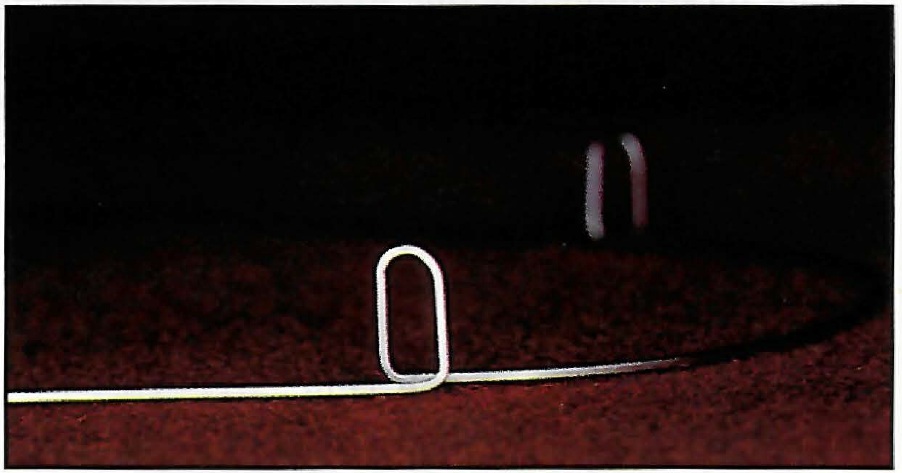
Fig. 1 K-SIR archwire: .019" x .025" TMA archwire with closed U-loops 7mm long and 2mm wide.
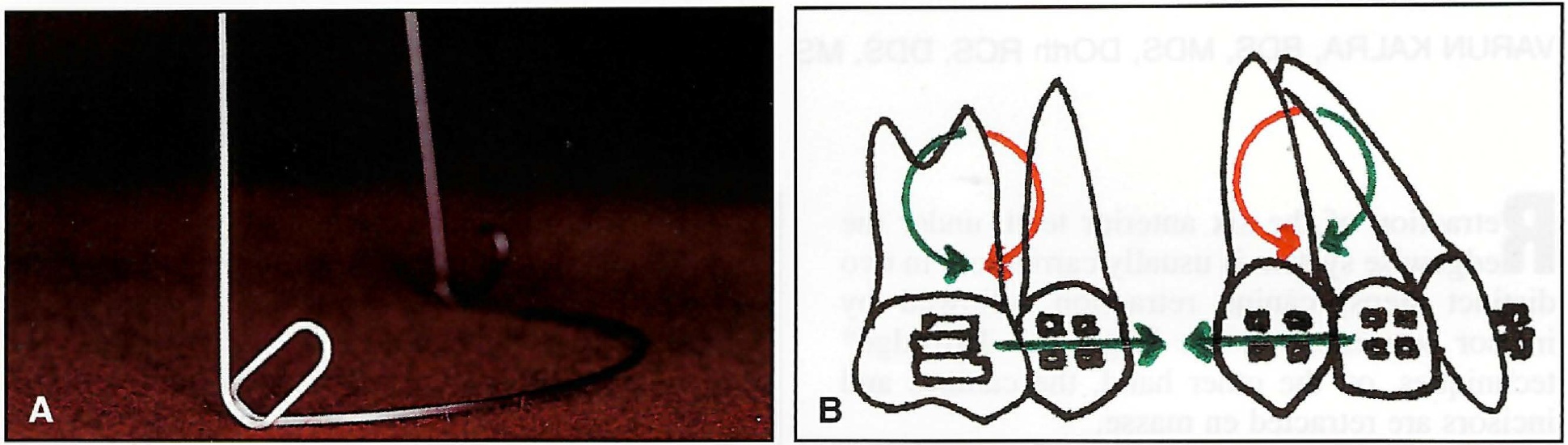
Fig. 2 A. 90° bends placed in archwire at level of U-loops. B. Centered 90° V-bend creates two equal and opposite moments (red) that counter tipping moments (green) produced by activation forces.
A 60° V-bend located posterior to the center of the interbracket distance produces an increased clockwise moment on the first molar (Fig. 3A), which augments molar anchorage as well as the intrusion of the anterior teeth (Fig. 3B).
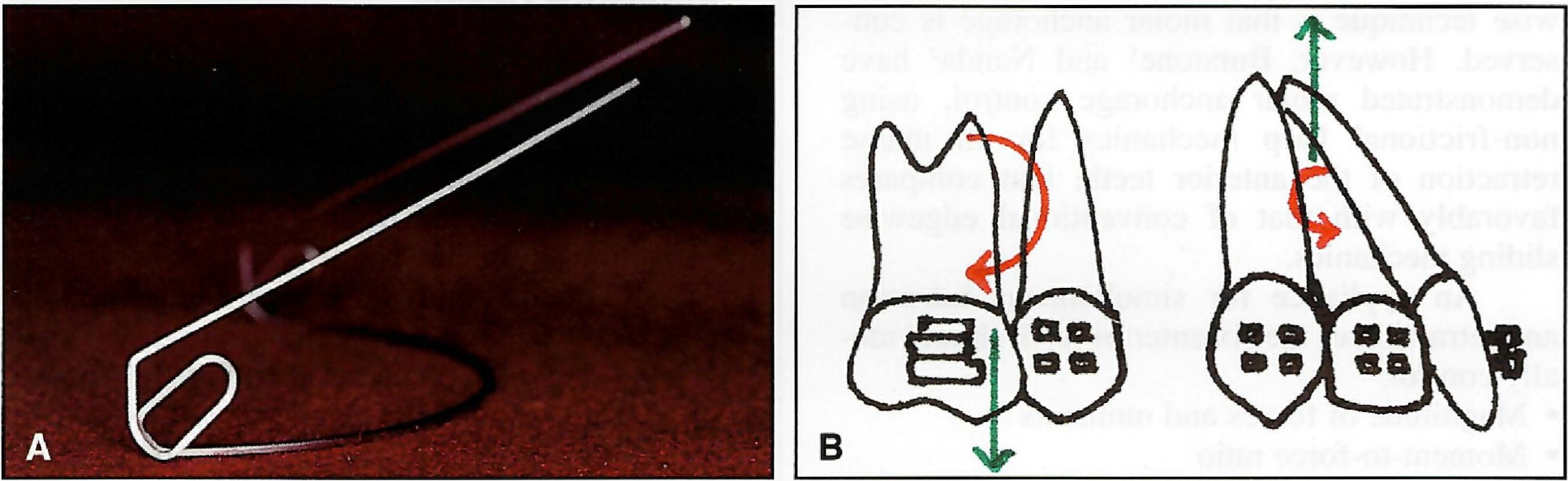
Fig. 3 A. Archwire with off-center 60° V-bend placed about 2mm distal to U-loop. B. Off-center V-bend creates greater moment on molar, increasing molar anchorage and intrusion of anterior teeth.
To prevent the buccal segments from rolling mesiolingually due to the force produced by the loop activation, a 20° antirotation bend is placed in the archwire just distal to each U-loop (Fig. 4).
Activation
A trial activation of the archwire is performed outside the mouth (Fig. 5A). This trial activation releases the stress built up from bending the wire and thus reduces the severity of the V-bends (Fig. 5B). However, the shape of the archwire should be maintained in subsequent activations of the loops.
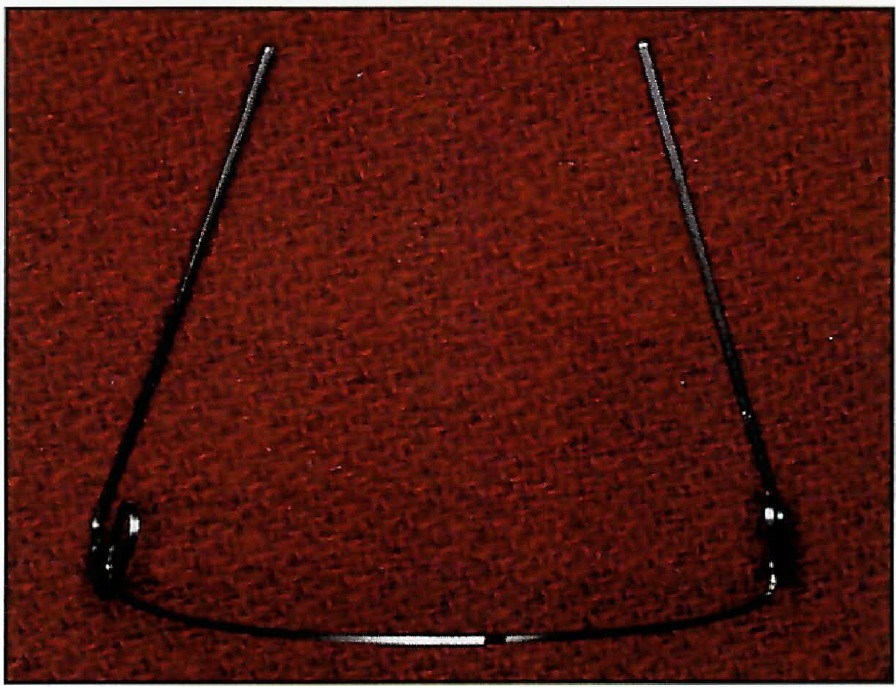
Fig. 4 20° antirotation bends placed in archwire just distal to U-loops.
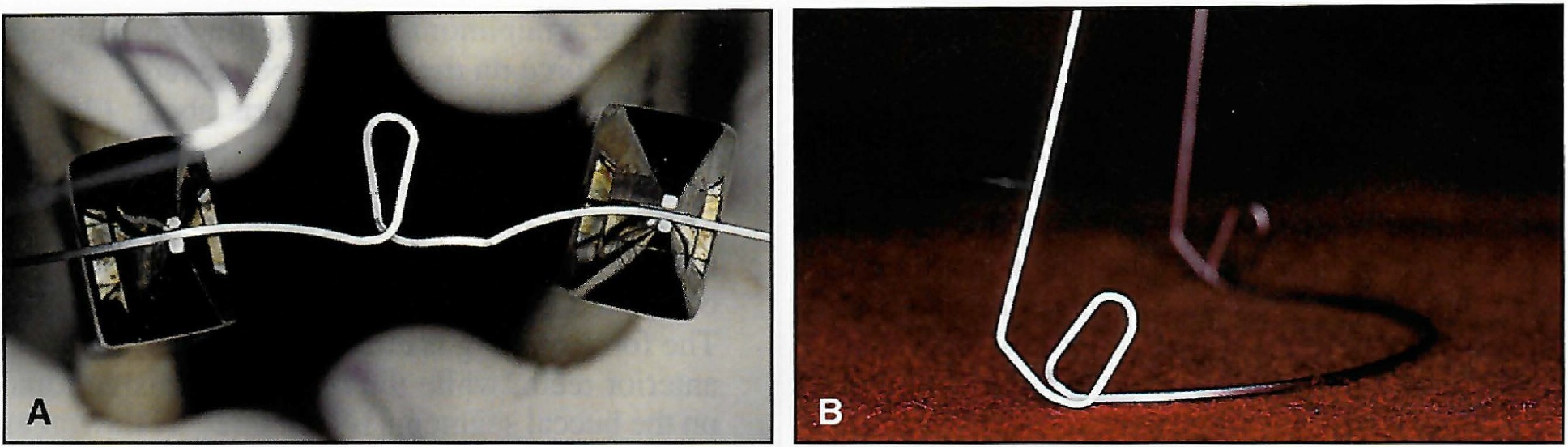
Fig. 5 A. Trial activation performed on each loop. B. Archwire after trial activation. Note reduction in severity of bends compared to Figure 3A.
After the trial activation, the neutral position of the each loop is determined with the legs extended horizontally (Fig. 6). In neutral position, the U-loop will be about 3.5mm wide. The archwire is inserted into the auxiliary tubes of the first molars and engaged in the six anterior brackets (Fig. 7A). It is activated about 3mm, so that the mesial and distal legs of the loops are barely apart (Fig. 7B).
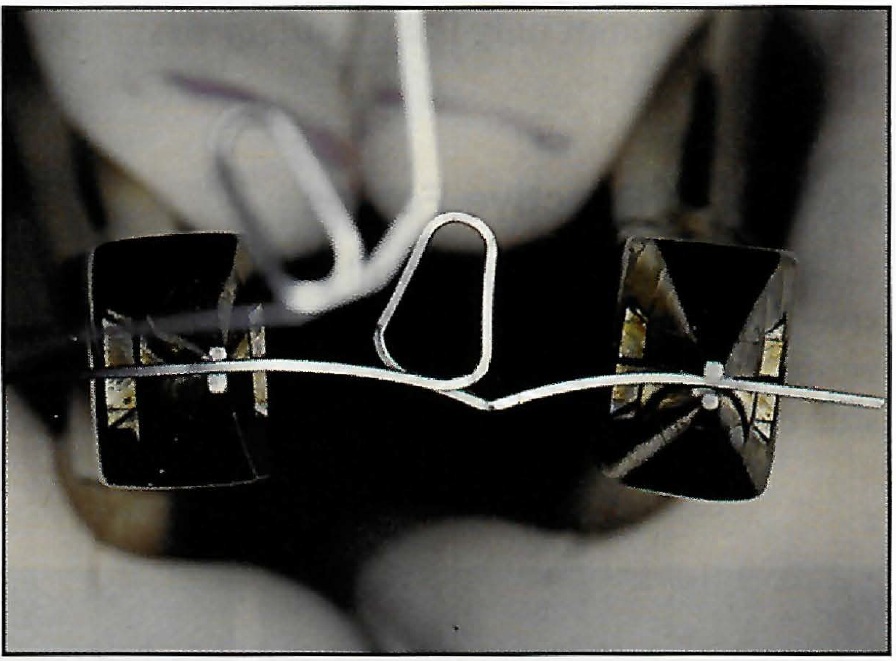
Fig. 6 Neutral position of loop determined with mesial and distal legs extended horizontally. In neutral position, loop is 3.5mm rather than 2mm wide.
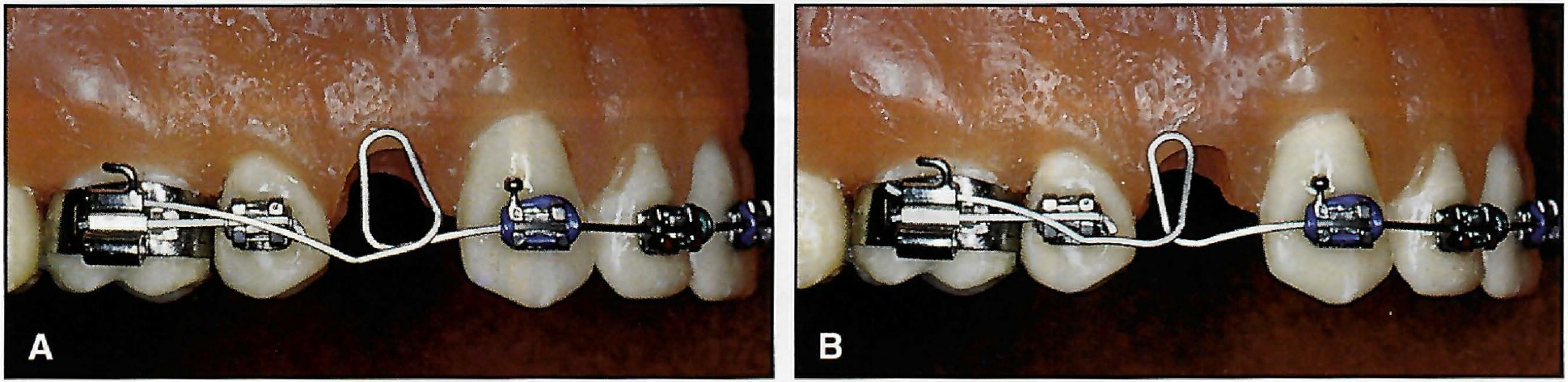
Fig. 7 A. K-SIR archwire in place prior to cinching back. First molar and second premolar are connected by segment of .019" x .025" TMA wire. B. Archwire cinched back to activate loop about 3mm, so that mesial and distal legs are barely separated.
The second premolars are bypassed to increase the interbracket distance between the two ends of attachment. This allows the clinician to utilize the mechanics of the off-center V-bend.
When the loops are first activated, the tipping moments generated by the retraction force will be greater than the opposing moments produced by the V-bends in the archwire. This will initially cause controlled tipping of the teeth into the extraction sites. As the loops deactivate and the force decreases, the moment-to-force ratio will increase to cause first bodily and then root movement of the teeth. The archwire should therefore not be reactivated at short intervals, but only every six to eight weeks until all space has been closed.
The archwire is typically in place for four to five months. Figures 8A and 8B-F show a patient treated with the K-SIR appliance. In view of the molar relationship, the severity of the overjet, and the soft-tissue facial profile, this patient was treated with extraction of only the maxillary first premolars.
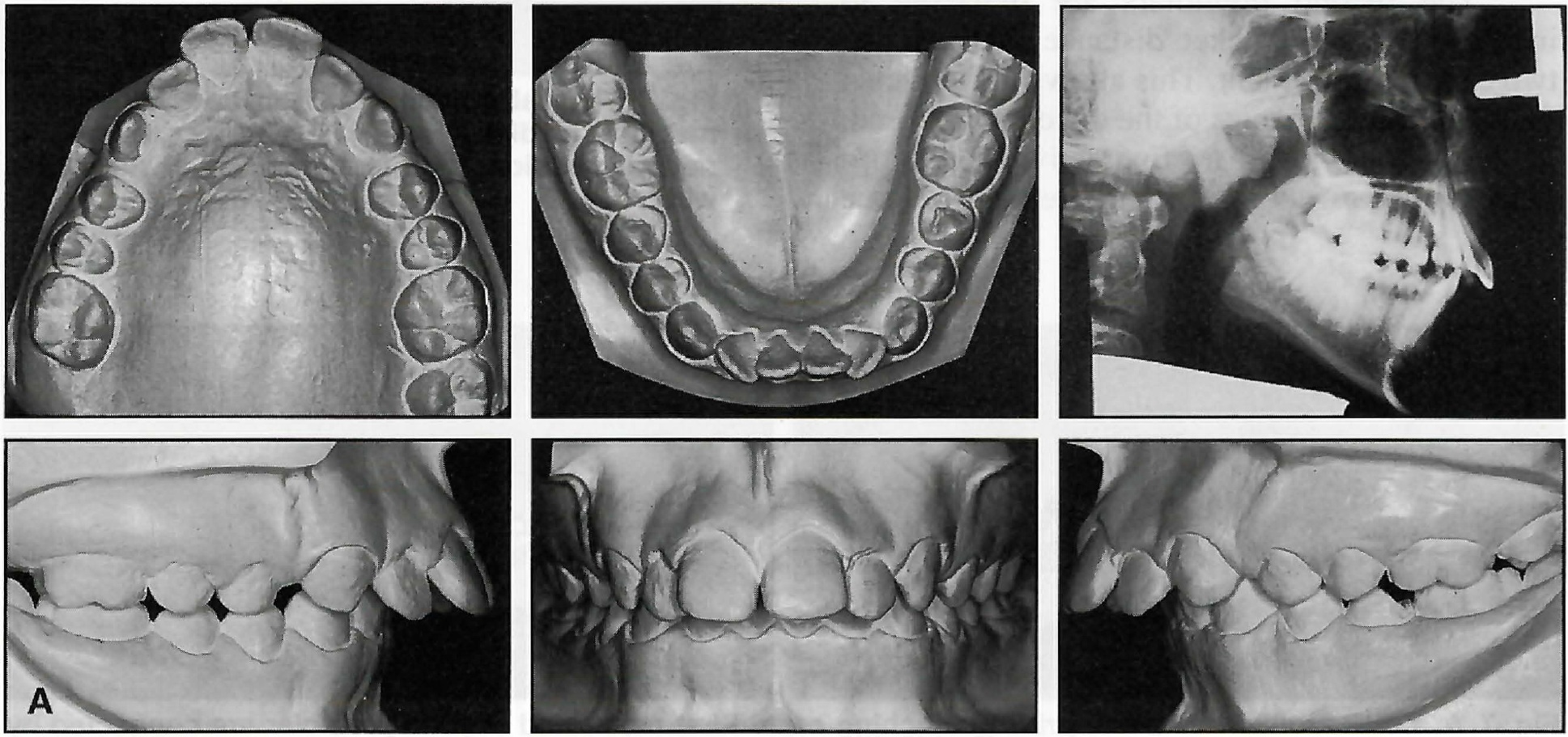
Fig. 8 A. Patient with Class II, division 1 malocclusion, deep overbite, and severe overjet (continued in next image).
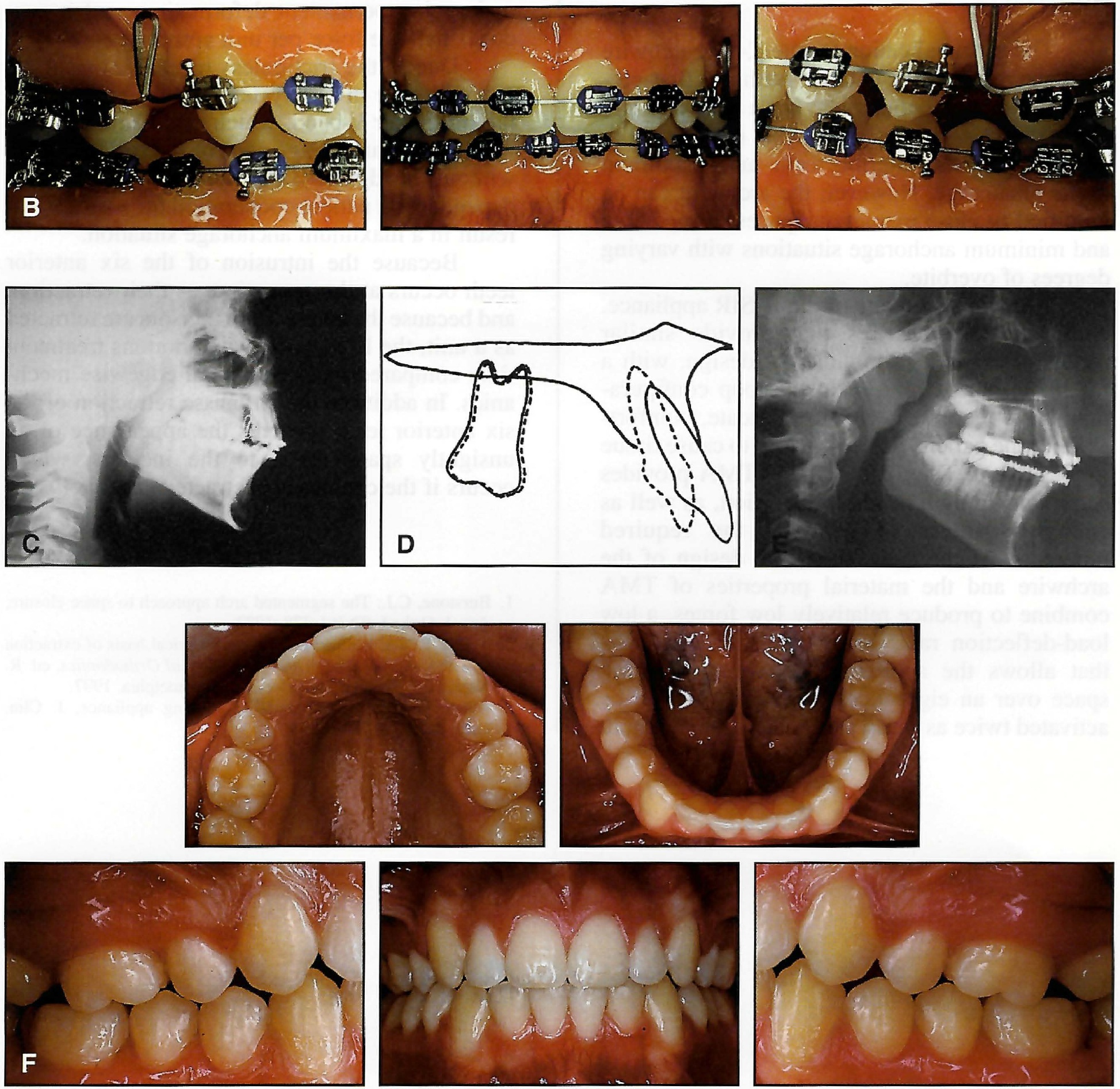
Fig. 8 (cont.) B. Space closure using K-SIR archwire. C. Cephalogram taken after eight months of treatment and four months of space closure with K-SIR archwire. Note reduction in overjet and overbite and control of molar anchorage. D. Maxillary superimposition (dashed line= eight months into treatment). Note retraction, intrusion, and slight tipping of anterior teeth. E. Cephalogram taken near end of treatment, after complete space closure and root correction. F. After treatment.
Control of Reactive Forces
Off-center V-bends will generate an extrusive force on the molars, which is usually undesirable. One of the keys to preventing unwanted side effects of an appliance is to keep the reactive forces at a minimum while exerting an optimum level of force on the teeth to be moved.
The K-SIR archwire exerts about 125g of intrusive force on the anterior segment and a similar amount of extrusive force distributed between the two buccal segments--generally the first permanent molars and the second premolars, connected by segments of TMA wire (Fig. 7A). The force of 125g is effective for intrusion of the anterior teeth, while the reactive extrusive force on the buccal segments is countered by the forces of occlusion and mastication. Extrusion of the buccal segments is not usually noted, either clinically or cephalometrically (Fig. 8B-F).
Another way to reduce the effects of the reactive force is to add teeth to the anchorage unit. Including the second molar will, of course, also increase anchorage in the anteroposterior direction. If even more anchorage is needed to resist both anterior movement and the extrusive force on the buccal segments, a high-pull headgear can be added to the molars. In practice, I rarely use a headgear with this archwire, except in extremely critical anchorage situations.
Discussion
The main indication for the K-SIR archwire is for the retraction of anterior teeth in a first-premolar extraction patient who has a deep overbite and excessive overjet, and who requires both intrusion of the anterior teeth and maximum molar anchorage. However, the archwire can be modified to close extraction spaces in moderate and minimum anchorage situations with varying degrees of overbite.
A major advantage of the K-SIR appliance, compared to archwires that provide similar mechanics,1,2 is its simplicity of design, with a minimal amount of wire in the loop configuration. It is, therefore, easy to fabricate, comfortable for the patient, and less likely to cause tissue impingement. The .019" X .025" TMA provides sufficient strength to resist distortion, as well as enough stiffness to generate the required moments. At the same time, the design of the archwire and the material properties of TMA combine to produce relatively low forces, a low load-deflection rate, and a range of activation that allows the appliance to continue closing space over an eight-week period. TMA can be activated twice as much as stainless steel without undergoing permanent deformation, and it produces half the force per unit activation.
Due to the frictionless mechanics used for space closure in this system and the presence of the off-center V-bend, which acts like an anchor bend, molar anchorage control is excellent, even without headgear. The clinician is thus less dependent on patient cooperation for a successful result in a maximum anchorage situation.
Because the intrusion of the six anterior teeth occurs at the same time as their retraction, and because the canines and incisors are retracted as a unit, the K-SIR archwire shortens treatment time compared to conventional edgewise mechanics. In addition, the en masse retraction of the six anterior teeth prevents the appearance of an unsightly space distal to the incisors, which occurs if the canines are retracted separately.
FOOTNOTES
- *Trademark of TP Orthodontics, Inc., 100 Center Plaza, LaPorte, IN 46350.
- **Registered trademark of Ormco/"A" Company, 17 17 W. Collins Ave., Orange, CA 92667.
REFERENCES
- 1. Burstone, CJ.: The segmented arch approach to space closure Am. J. Orthod. 82:361-378. 1982.
- 2. Nanda, R. and Kuhlberg, A.: Biomechanical basis of extraction space closure, in Biomechanics in Clinical Orthodontics, ed. R. Nanda, 1st ed., W.B. Saunders Co., Philadelphia, 1997.
- 3. Kalra, V.: The K-loop molar distalizing appliance, J. Clin. Orthod. 29:298-301 , 1995.
-
 DR. KALRA
Dr. Kalra is a Clinical Associate Professor, Department of Orthodontics and Dentofacial Orthopedics, School of Dental Medicine, University of Pittsburgh, Salk Hall, 3501 Terrace St. , Pittsburgh, PA 15261, and in the private practice of orthodontics at 20119 Van Aken Blvd. #204, Shaker Heights, OH 44122.