

2026 Eugene L. Gottlieb JCO Student of the Year: Dr. Jonjei Ku
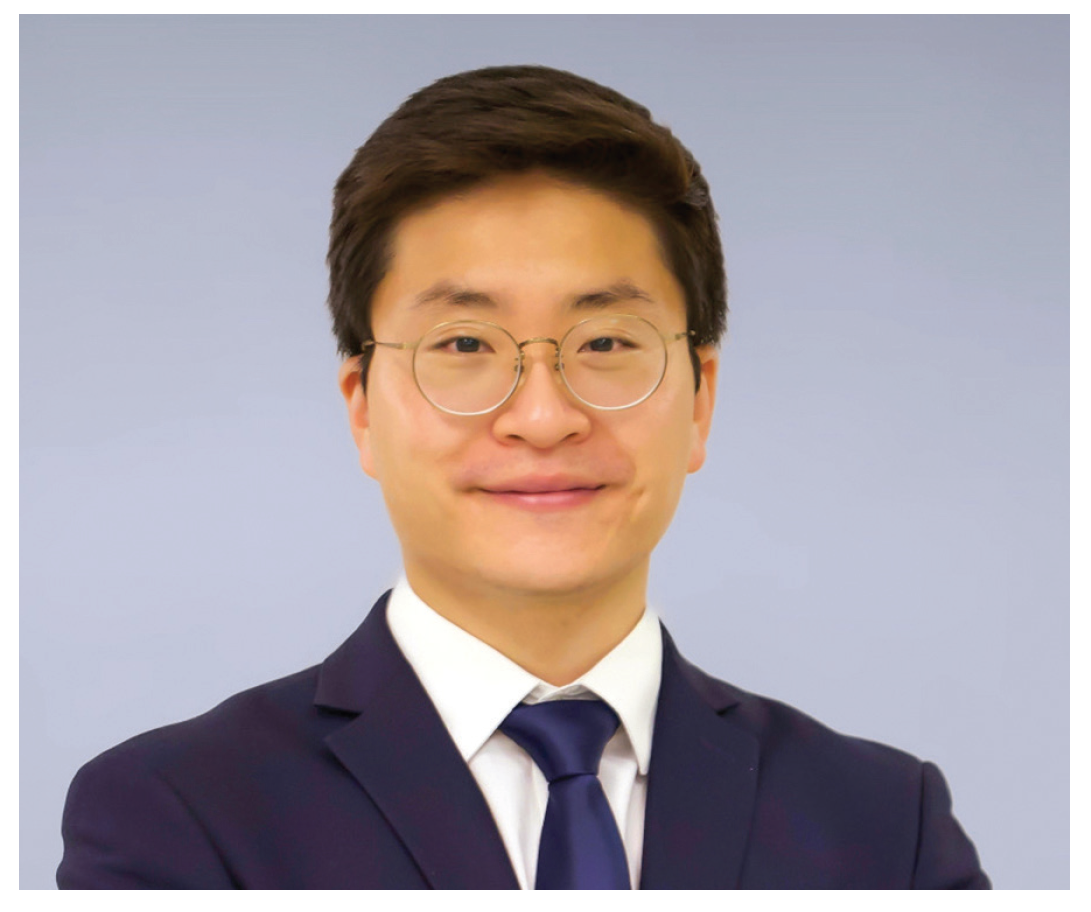
The Journal of Clinical Orthodontics is pleased to name Dr. Jonjei Ku from the University of Nebraska Medical Center as the winner of the 2026 Eugene L. Gottlieb JCO Student of the Year Award, presented by American Orthodontics. Dr. Ku was selected over 21 other students from schools around the United States and Canada in a two-stage, months-long competition judged by members of the JCO editorial board. His prize includes more than $8,000 worth of materials and travel from American Orthodontics, JCO, and Dolphin.
Dr. Ku is the eleventh Student of the Year award winner, joining Dr. Korey Searle of the University of Michigan (2025), Dr. Grace Huang of the Harvard School of Dental Medicine (2024), Dr. Bianca Lau of the University of the Pacific (2023), Dr. Shelby Steffenhagen of the University of Texas Health San Antonio (2022), Dr. Amanda Gross of Texas A&M University (2021), Dr. Saro Atam of Stony Brook University (2020), Dr. Katya Skillestad of Texas A&M University (2019), Dr. Samaneh Mojarrad of the University of Pennsylvania (2018), Dr. Moataz Elmahdy of the University of Rochester (2017), and Dr. Krystian Jarosz of Rutgers University (2016). Ten schools have thus been recognized to date.
Any U.S. or Canadian orthodontic department was eligible to nominate one current student by submitting two letters of recommendation and the student’s personal essay. Each student was then given the materials from an unpublished case and asked to write a complete treatment plan, including all possible alternatives, within two weeks. Three JCO editorial board members narrowed the initial group of 22 nominees down to 12 finalists in December. In the second stage, each of the finalists submitted an ABO-style case report. The judging panel included Dr. John Graham of Salt Lake City; Dr. Neal Kravitz of South Riding, Virginia; Dr. Michael Meru of Thousand Oaks, California; Dr. James Noble of Toronto; Dr. Sarah Shoaf of Winston-Salem, North Carolina; and Dr. Peter Sinclair of Los Angeles.
Similar articles from the archive:
As in past years, the judges were highly impressed by the quality of submissions. Dr. Ku’s case report, published in this issue, was actually accepted through JCO’s standard peer-review process, before he submitted it for the competition. All finalists will be featured on our Facebook page.
Congratulations to Dr. Ku and the University of Nebraska Medical Center! Current orthodontic students and faculty can expect the start of the 2027 nomination process in August.
PHILIP B. VOGELS
President, JCO, Inc.
Q&A with Jonjei Ku, University of Nebraska Medical Center
Can you tell us a little about yourself? For example, where are you from? What do you like to do for fun? What is your family like?
I grew up in San Jose, California, in the heart of Silicon Valley, where my parents had immigrated from Taiwan in the 1980s as some of the first of their peers to study computer engineering. Being surrounded by technology from an early age sparked a lot of my interests, from building computers to joining my high school varsity robotics team (Go Warriorborgs!) where we built a basketball-playing robot. That background continues to influence how I think about orthodontics today.
Outside of the clinic, I love cooking and have recently fallen down the rabbit hole of espresso, from dialing in the perfect grind to chasing that ideal shot. I even brought my espresso machine into the resident room, and making lattes for my coresidents, assistants, and faculty has become one of my favorite parts of the day. There is something about the precision and craft of it that appeals to the same part of me that was drawn to robotics and technology growing up. I am also lucky to have a close and supportive family that has been with me every step of this journey.
Why are you pursuing a career in orthodontics?
Growing up, my family dentist was always so kind and friendly, which led me toward wanting to pursue dental school. While in dental school, I felt that orthodontics was the perfect blend of applied art and science, with the ability to make a lifelong impact on patients’ smiles and confidence.
I also loved seeing how the field continues to advance through new technologies. The headquarters of Align Technology was actually down the street from where I grew up, and I visited their office and research facility while applying for an internship there prior to starting dental school.
Can you describe the path that led you to the University of Nebraska Medical Center?
What stood out most to me about University of Nebraska Medical Center was the warmth and family-centered nature of the program that I experienced during my interviews. The program’s reputation for excellent clinical training, combined with the supportive culture among faculty and residents, ultimately led me to choose Nebraska for my orthodontic education.
What has surprised you the most during your orthodontic education?
One of the most surprising things during my orthodontic education has been how complex diagnosis and treatment planning can be. Many orthodontic concepts are introduced only at a surface level during dental school, but residency really reveals how much deeper the field is, particularly when integrating growth, biomechanics, and long-term stability into treatment planning.
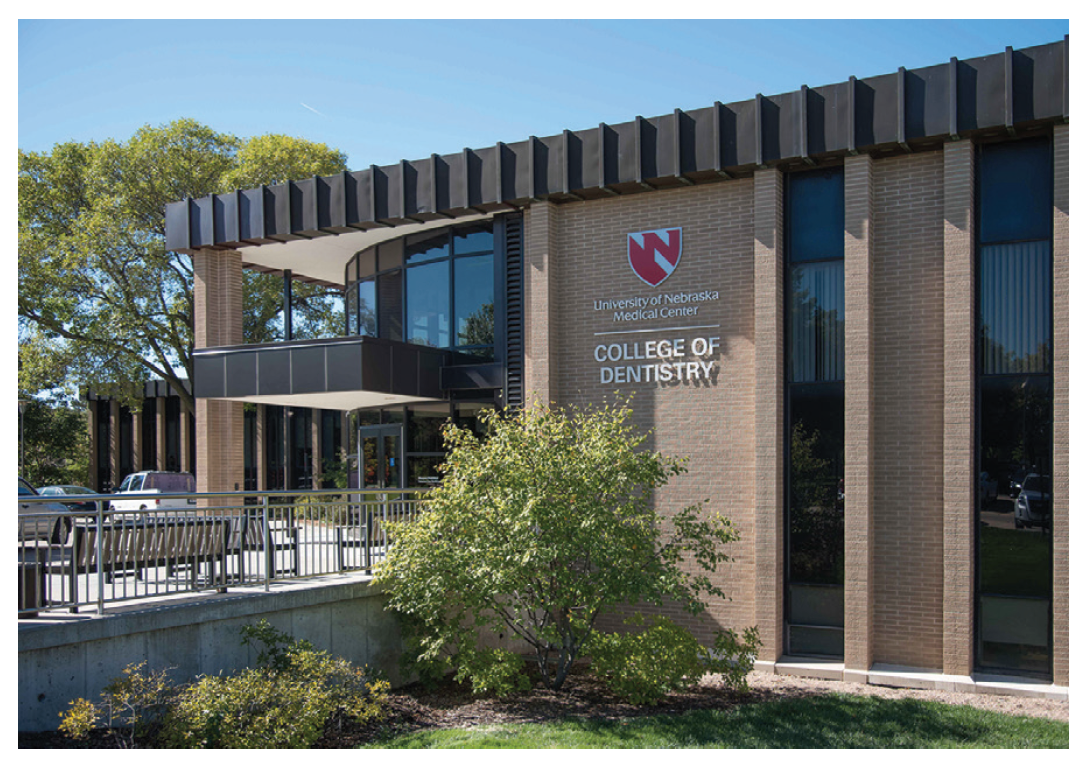
University of Nebraska Medical Center (photo courtesy of University of Nebraska Medical Center).
What has been the most difficult part of becoming an orthodontist?
The most difficult part of becoming an orthodontist was the initial months of residency, when learning to combine didactic knowledge with clinical experiences in a field that is often only introduced at a surface level during dental school.
There was a point about a year into residency when everything began to click for me. That was when I could start seeing the connections between all the didactic courses and integrate them into my treatment planning and clinical decision-making.
What, so far, has been your most rewarding orthodontic experience?
Being able to work closely with faculty, staff, and my coresidents to provide a measurable, life-changing impact for patients every day has been the most rewarding experience.
The University of Nebraska College of Dentistry is the largest Medicaid dental provider for the state of Nebraska, which allows us to treat many patients who might not otherwise have access to orthodontic care. Being able to tell a parent that their child’s orthodontic treatment will be fully covered and then seeing their happiness as treatment progresses all the way to debond is incredibly rewarding. Moments like that remind me how grateful I am to be part of this profession.
Please briefly describe your most difficult case during your time as a resident.
My most challenging resident case was defined less by the complexity of the malocclusion and more by navigating a patient who had strong feelings about directing their care from the very beginning.
At the first appointment, the patient requested that we remove the bracket hooks after bonding. When we explained their purpose for elastics later in treatment, they initially did not want to accept this. My faculty and I took the time to walk them through the reasoning, and we ultimately reached a compromise that the patient felt comfortable with.
Later that same day, the patient urgently requested an emergency visit due to irritation from the brackets. Worried for the patient, I set up an after-hours visit and spent over an hour with them providing a more advanced PVS relief aid, addressing every concern, and making sure they truly felt heard and cared for rather than just treated.
For the first several appointments, the patient always had a lot on their mind and rarely came in without a list of questions and concerns. I made it a point to listen and engage with every one of them. Slowly, appointment by appointment, I could see the dynamic shift. The anxiety gave way to comfort, and the questions gave way to conversation. Watching that trust and bond grow over time became one of the most meaningful parts of my residency.
This case reminded me that as providers, we must see our patients as people first. The clinical work matters deeply, but so does the human being sitting in the chair. Meeting them where they are, with patience and genuine empathy, is what makes this specialty so rewarding.
Any research projects you’d like to briefly share with our readers?
During residency, my research thesis has focused on the potential therapeutic benefits of alendronate and abaloparatide for treating temporomandibular joint osteoarthritis in a mouse model. My hope is that this research contributes to identifying medications that may one day help treat patients with temporomandibular joint osteoarthritis, since current treatment options are largely palliative.
What are your postgraduate plans?
My postgraduate plans are to return to my home state of California and begin working as an associate orthodontist. Long term, I hope to own my own orthodontic practice, teach in a dental school orthodontic clinic, and remain active in the orthodontic community through volunteer outreach and research.
What do you think orthodontics will look like in 10 years?
In 10 years, the applications of AI and digital workflows will likely be significantly enhanced within orthodontics. Patient care will become increasingly customized, leading to improved efficiency in treatment duration and more predictable outcomes.
I also believe we will see major advancements in clear aligner material science, something we are already beginning to observe with the development of shape-memory aligners.
Rapid-Fire Round
How can orthodontists thrive in today’s competitive marketplace, particularly with the increase in dentists offering various forms of orthodontics?
Finding one’s niche in the community and collaborating closely with general dentists to provide the best orthodontic outcomes will help orthodontists continue to thrive.
Social media: Should it be a major tool in an orthodontist’s marketing arsenal?
Social media can be very effective for direct-to-consumer marketing, although it requires consistent effort and engaging content to be successful.
Clear aligners: What malocclusions should they be considered or not considered for?
While many cases can be treated with clear aligners, clinicians must carefully consider the anchorage and torque control requirements for each individual case.
TADs: Are we moving toward too much TAD usage, or will applications continue to increase?
TADs are an incredible tool. While many applications are already well established, new uses and improvements in success predictability will likely continue to expand their role.
Extraction: Where do you stand?
Some cases are best treated with extractions, but we should thoughtfully consider all alternatives, especially when patients prefer a nonextraction approach. Advances such as TADs and MARPE may allow us to treat certain cases without extractions that previously required them.
Retention: Should patients always be pushed toward permanent retention, and how long should we continue to see them on recall visits?
Permanent retention can be very helpful for maintaining orthodontic results, but oral hygiene must always take priority. If calculus accumulation becomes a persistent issue, retainer removal may be necessary.
Phase I treatment: Overused, underused, or properly used?
All three at the same time. In residency we are taught careful indications for Phase I treatment, but in private practice, its use may vary depending on clinical philosophy and practice economics.
3D printing: Are we going to reach a point where orthodontic practices must have this capability in-house?
3D printing will likely become a helpful capability for many practices, but not necessarily a requirement. Labs can often provide the same services with greater redundancy and reliability.