
Favorite Saved

THE EDITOR'S CORNER

Practice in the Pandemic

JCO is grateful to the members of this group who devoted one full meeting of their study club to a round table discussion with the editor on owning, planning and equipping an orthodontic office.

GOTTLIEB: Each of you in this group owns or has owned his own office. What is your current office situation?

COTE: In my case I was renting a suite that didn't lend itself to the modifications that I wanted. As you practice longer, you get to know at what load level you want to work and what facilities you would like. The office I had could not be adapted to what I wanted. Also, if you own the building, it can be maintained in the way that you like and the parking can be controlled, because the number of occupants is controlled. In a building in which you rent, the builder is more concerned with making a maximum income from the building and less with the convenience and comfort of you and your patients. So, these are some of the reasons that I wanted to be an owner. I went into a syndicate of sixteen professional men. Everyone was an owner-renter which assured full occupancy and the direct interest of everyone in the quality and maintenance of the building.

gurin I am in a situation in which some of the occupants are ownertenants and some are only tenants. An unfortunate result of this situation is that I became part of a syndicate involved in a threatened lawsuit against one of my best referring dentists because of a disagreement. He is a tenant and I am an owner-tenant outvoted by the other owners who are not wearing the two hats that I am. So, I would suggest that everyone take a dim view about being an owner in a building in which people who refer patients to you would be renting space. Landlords and tenants are natural enemies and sooner or later there is going to be trouble or the risk of trouble and it's not a desirable situation. Suing referring dentists is really not a good way to build and maintain a practice.

conarck I don't think that necessarily has to happen. We have eight men in our building and we feel

that the tenants are treated very well. In fact, I would prefer to be a tenant in my building rather than an owner, because the tenants don't have any of the responsibilities, but they receive all the benefits. We treat them as equal in every way and they are very happy.

fields Our situation is that all the owners are tenants in the building. We have eleven offices and four of us are owners; there are seven tenants. The building is maintained at the same level for everyone. In any real estate situation, you are going to occasionally have someone who is dissatisfied. In your case, Larry, the only reason it is a special problem is because it is a good referring dentist who is involved.

gurin Precisely!

thomas We built two buildings one of which is a partnership setup in Westport and the other is a corporate setup in Danbury. These were the first professional buildings built in either town. They were built because there was a lack of available office space in either area. These are not money-making propositions. Neither one of our buildings throws off the kind of profits that a more commercially oriented enterprise would. By the same token, they gave us the amount of office space that we required at a rental that we wanted to pay; and they gave us the quality of service and the advantage of being able to build the kind of offices that we wanted. One building is owned by eight men in a corporate setup. Each office was specifically designed for the individually Since then, one of the doctors has died and his widow has realized a net gain on his initial investment. In the other building, there are three of us who are owner-tenants and the rest is rented out to other professional and commercial enterprises. That has worked out successfully and again gave each of us the physical area that we wanted.

gurin And you never had any unpleasantness with the renters?

thomas Yes, you have unpleasantness as Bob has said. There have been problems, but they all have been settled amicably. Being an owner gives you a certain amount of security in the sense that you are not constantly badgered by higher rentals, but I think the most important thing is that they are buildings that are well set up and well maintained. The advantages offset the disadvantages.

adler I didn't want to get into a large syndicate with all the complications that I thought would be involved. That is, having sixteen people or eight people to be satisfied in the design and construction. It seemed to be too formidable a task and one for which I wasn't suited. Nor did I want to be a landlord and face the sort of thing that Larry mentioned. My choice, therefore, was to build a small building with one partner, a physician. The two of us own and occupy the building. The decision to have our own building rather than rent space was not primarily the income that might be derived from ownership or the savings that might be affected by paying rent to ourselves. An orthodontic office is a fairly large investment and the thought of putting this kind of investment into rented space was not particularly attractive to me. I felt that if the investment went into space that I owned, I could make the kind of renovations and put in the kind of fixtures and equipment that I

chose without being concerned that this was in someone else's building and that when the time came for a rent increase, both the owner and I would be very much aware of the tremendous cost of plumbing and renovations. In effect, he would be reaping the benefit of the plumbing and renovation that I put into the building. All of us here seem to be pretty much agreed that it was not our original intention nor our subsequent experience that owning the building in which we have offices has been a particularly good investment, but that it has been enormously satisfying in other ways.

fields There are two factors involved here. One is the idea of an office and the other of an investment. We all pay rent in the building the same as any other tenant. When the rent goes up for them, it goes up for us. Obviously, as an owner, it's a return on investment, but from the point of view of the practice, it's a payment of rent. The fact that I chose to put my money into the building rather than a supermarket was because, when I looked in Stamford, there was no good space available. Today if I was looking, I would rent space in this town because there is space available now and the advantages of my owning the building are not so great.

fine No one has discussed the possibility of real estate problems that accompany a recession or the fact that incorporation laws may change to your disadvantage or that you are all talking about suburban problems. The idea of putting up a professional building in cities is largely prohibitive.

cote Most orthodontists in cities probably practice among commercial offices. It points up the advantage of doctor-run and doctor-occupied buildings. It is a nicer building to practice in because it is better maintained. They understand the problems; they have the same kind of ideas; they don't have to take that much money from the building because they are making enough money in their practices.

gurin I think the building should be entirely owner-occupied if possible.

conarck I think we would all agree that we would not consider investing in such a building if we were not to occupy it ourselves. Having a group of people limits your investment and it also enables you to obtain a better mortgage than you could alone. Another thing I thought was important about owner ship was that it permitted me to take part in the design of the building and of the office space that I needed.

fine Of course, the flip side is that in the event that you must vacate the space, it may constitute a decided disadvantage.

conarck That is generally true. If you sign a lease and have to vacate, you are still stuck with the space. You are really no worse off owning the space.

fine What I am referring to is that if you make some unusual design that departs from conventional dental layouts, you might have trouble finding a dentist who'd rent your space.

fields I am thinking of bringing in an associate which would mean that my office, large as it is, would be inadequate within a period of time. So I ask myself, "Should I remodel here, since I am an owner? Or, should I move to another location, which would be better for my practice?" Sometimes you might feel forced to do something that was not good for your practice because you own the real estate. That's why it may be better to rent. When you talk about the high cost of setting up an orthodontic practice, it's true, but it really isn't a major factor if you amortize it over the term of a ten-year lease.

gottlieb I have been surprised by the agreement that owning your own office is not a good investment. As someone who never made the investment, I have always been under the impression that there were such advantages to being an owner-tenant, that this was something I should have done years ago. Are there not such great tax advantages, for example, that it becomes only a matter of what size the building should be in order to be the most advantageous investment?

gurin The basic advantage of being an owner-tenant is the freedom to design your own office. The reason it's not a good investment is that, if you are the owner, you have to rent the space to yourself at whatever the going rate is. Otherwise, you are being unwise as owner because you can rent the space to another tenant at the going rate. Somewhere in his calculations a landlord includes a certain amount for profit and, to generate that, he runs his building with a tight hand, he is a business man. The doctor-owner, on the other hand, is frequently quite liberal with expenditures. He wants the finest of everything because he is using it personally. Whatever needs doing, he probably has done at the highest rates possible since he is not a professional landlord. He doesn't do his own repairs. He usually doesn't do his own rent collection. He's not a businessman running the building for a profit. Overhead on doctor-owned buildings tends to be much higher than in non-doctor-owned buildings. Therefore, if you invest in a commercial enterprise, you will earn more than from your doctor-owned building.

thomas The same reasoning applies to a private home. I'm sure that you can rent any kind of apartment or house much cheaper than owning your own house. When you invest in a professional building, you must consider that it is a luxury.

gurin Like buying a Ferrari.

thomas That's right You're buying something for yourself, for your comfort and enjoyment. As far as an investment is concerned, Larry is absolutely right because none of our buildings throw off the kind of return that you would normally anticipate from a real estate investment. Doctor-owned buildings are not tightly run ships. They are not conducted in a business-like fashion so as to keep costs down and the rent roll high.

cote In our building, the rental had to be set at $6.50 a square foot to make expenses plus a bit of cash flow at the end of the year. Buildings being built in our town now rent for $8.25 or $8.50 a

square foot. I'm happy I'm not going out and renting space at that rate. In my present building rent will only increase somewhat through increases in taxes and maintenance. On the latter we have some controls.

thomas Are you making any money as a commercial investment? Is that building throwing off any sort of profit?

cote No.

thomas Therefore, it is not a good investment vehicle.

fields Even though it's not throwing off anything, there is a long range profit. You are amortizing and your value has increased. The building is profitable as an investment in the long run.

gurin But not as profitable as renting the same space at the same rent and investing the capital in a more sound commercial real estate venture.

adler On the question of stability of rent. Our rent increases just as anybody else's does. You have to renegotiate your leases with yourself. You must keep raising your own rent because of tax and maintenance increases.

fine If you don't, when the time comes to sell the building or your share, the building will show no cash flow and you'll get nothing for it.

conarck Yes. There is a potential profit in owning your building. Let's say a number of men built a building and, in order to secure a mortgage, have agreed to pay rent at the rate of $6 per square foot. Over a period of years the cost of construction could have increased and it might then be necessary to pay a rent of $8.50 per square foot for the same kind of space. The owners could increase their rent to that amount. This increases the value of their building, which is a multiple of rent. This enables them to refinance their mortgage for a larger amount and results in a return of capital. This can be done periodically depending on the rate of inflation. There-fore, there is a profit potential to a building depending on the rate of inflation.

However, the point that Larry made was very important. If one were to build the building as an investment, he might build it for $20 a square foot, whereas, with a group of physicians, he may actually build it for $30 a square foot. Naturally, the return is not going to be the same. In terms of the value of the building, it could be very good as the rent roll goes up. It will be worth more whether it was built for $20 or $30. However, since he decided for his own comfort to build at $30, it really isn't a very good investment. Perhaps at $20 it would have been a good investment.

adler Gene assumed that depreciation was a major factor in terms of tax savings. I am an owner in my building in a corporation rather than a partnership. Therefore, I can't personally take advantage of the tax savings. This was deliberate. We decided that with the risks involved with a partnership

as opposed to a corporation, the tax advantages were not sufficient to outweigh the protection of a corporate structure.

thomas We have a partnership in one building and on that we've realized a certain amount of depreciation on our personal taxes. We have a corporate setup in the other building, which is not advantageous from the tax point of view. The only reason we went into the corporate structure was to limit the liability. By doing so, we missed the obvious tax advantages. If we had been astute, we would have covered whoever was going to be the general partner with enough insurance so that any liability claims would be covered and the cost would have been offset by the gains we would have made in a partnership structure rather than a corporate one.

fields We are a partnership. I can't see any reason not to be a partnership and miss out on the tax gains. You can cover yourself with a million dollar umbrella insurance policy.

adler Your children can gain income from the building either through a second mortgage or through ownership. They can give a second mortgage to the corporation and a great deal of what would be accruing to you in cash would be spent on interest payments on the second mortgage. In terms of the children owning the corporation, while it can't be a Subchapter S corporation, they can gain from the increase in value of the corporation.

fields That can be complicated with more than one or two partners. I can't see anything but a partnership. As a partnership, the building depreciates at a certain rate which is dictated by the Internal Revenue Service. It will vary depending on the building, whether it is brick or wood. It could be over a 25-year period. The value of the building, let's say $500,000, is depreciated by dividing the amount over the period of years. On $500,000 over 25 years, you would have $20,000 of depreciation each year to divide among the partners to be applied to their individual tax returns as a deduction. Now, if it's a corporation, you don't get the same benefit. The corporation is taxed at 22% and your personal tax is in a much higher bracket. The deduction is much more valuable when it is available in the higher personal tax bracket.

gottlieb Is there a point beyond which you should not go? If you have ten or fifteen years of usable professional life left, should you forget about building a building? Of course, you gentlemen are saying to forget about building a building anyway, aren't you?

gurin Not exactly. If you want to own a Ferrari and you can afford it, buy it.

fields If you have ten or fifteen years of usable professional life that you are anticipating, I would think the best way of owning a building would be either by yourself or with one other partner. The real estate will be a relatively bigger portion of the package and the property will always have a certain value.

fine If you incorporate in your later years, you are now allowed to build up your equity at a much

more rapid rate. Contracts have been approved which permitted putting away 50% or 60% and even more of your gross income into a retirement or pension fund. In building a building, you might want to take the money out of the pension fund.

fields Anybody anticipating building should realize that real estate investments are non-liquid.

gottlieb Assuming that you decide, for better or for worse, to build an office, what are the considerations on where you are going to locate this project? Is zoning a problem?

thomas It took us 2½ years of exasperating fighting to get the zoning changed in one town and at an extremely high legal expense. It is better to have the correct zoning to start with.

fields You can buy a piece of property unzoned much more reasonably than you can buy it zoned. Even so, it is better to have the correct zoning before buying the property.

thomas You can buy the land and the zoning board still won't give you the necessary approval. Then you are stuck with a piece of property you don't want.

gottlieb Did anyone have problems with other local ordinances such as parking regulations?

thomas Many times you have to limit the size of your building to accommodate to the parking regulations in the zoning ordinance of so much parking space for so many feet of office space. These requirements vary from town to town.

fields Since land is one of the higher costs, the more you can cut down land cost per unit, the better off you are. Therefore, you can't provide all the parking that you want. Does anyone here have all the parking that they need?

cote We have more than we need.

adler We have more parking than is required. Therefore, as tenants we are better off.

fields The amount of parking an ordinance requires is rarely enough. We have fairly good parking, but the help alone takes up one-third of the space. The cost of this land is so high that it can be economically unsound to provide adequate parking. Adequate is a lot of parking.

thomas I agree with you.

cote Sometimes you can be the victim of parking for adjacent businesses and industry. We are not located in an area where that would occur, so we have more than adequate parking.

fields How many spaces do you have?

cote 125 to 130 spaces. I've never seen all the spaces taken.

thomas Certain types of practice such as orthodontics, pediatrics, allergy and oral surgery have a large number of short appointments and generate a tremendous traffic flow. Parking is generally inadequate when such varied offices are located in one building.

cote Our zoning laws not only regulate the amount of parking space, they limit the number of doctors that can go into the building. There are other factors too. A lot of towns restrict the height of buildings. Not many permit buildings over four stories. And we had to change the exterior of our building to conform to local requirements in architecture.

fields Many of the things we've talked about-- zoning, parking and the like -- are not given much thought by someone who never built a building. Yet, they take vast amounts of time and anyone anticipating building should plan to spend time on this and many other things you never consider as being a part of this. I have had vindictive letters from people who live in the apartment house next door and use our parking lot, because we tow cars away at night. I've had policemen in. I've had irate people in the middle of an afternoon's practice. This is just in regard to parking. It's part of the game and you darned well better be prepared for it.

gottlieb Who should occupy the building? Should they be all professional? Should there be non-professional?

fields Zoning determines some of this.

cote Our building is only zoned for medical and dental offices. I think it enhances a building to have related enterprises.

fields Here we're getting back to the question of an investment versus an office. If I were a tenant looking for an office, I would like to have it the way Earle just said, all professionals, medical and dental. If I own the building and have empty space, I want to rent the space. In our building we have lawyers, an engineering firm and a real estate office in addition to the remainder who are medical and dental.

conarck It adds to the prestige of the building to have just health people in it and you can get higher rentals. There is an office building next to ours in which you can rent space much cheaper.

fine Your experience is contrary to what we see in New York City, where triple-A commercial tenants will pay much more for office space than a professional will.

conarck a m thinking in terms of a small town where a new professional coming into town has a choice of going into a varied-occupancy office building where he may feel isolated, or going in among physicians and dentists where he may feel added stature. He may feel that it is a much easier

way of getting started. Therefore, he is willing to pay a premium.

fine The proximity to a group of professional men may enhance your referral status with them and detract from it with others.

conarck I practice in a building with a general dentist and, as far as I can tell, this doesn't affect my referrals from other dentists. I think most dentists are sophisticated enough now not to care about that.

fields g don't think it makes a bit of difference. The original partnership to build our building had two general practitioners and three specialists and I had no concern. It can be a plus. I don't think it is often a minus.

fine I practice in a large professional building with a hundred or more physicians and dentists. I think the fact that I am convenient to them causes them to refer to me.

gurin I think there is a danger for a new man in town to move into a building in which there is only one general dentist. Dentists who are not secure -- and all dentists are not secure-- may elect not to send patients because it is safer not to have them go past another dentist's door.

gottlieb In building a building, do you have leases prior to starting the project?

fields Your mortgage is very often contingent on the rent roll. Even if you get a desirable mortgage, you might not get the full amount until you have achieved 75% rental. The arrangements vary and they depend on the lender. Certainly it is advantageous to rent as quickly as possible.

thomas You have to. In order to build any size building, you certainly have to have your leases signed up in advance of construction so that you can get the best size mortgage at the best terms.

gottlieb Do you want to sign long leases or short ones?

thomas A minimum term is three years. Usually the term is five years with an escalating tax clause. Even with inflation, you don't expect rentals to get out of hand in a five-year period. When the rental is renegotiated, inflationary trends can be taken into account. In Earle's building where all the tenants are owners, they can renegotiate their rent up or down every six months if they want to. If there are owners and tenants in the building, the owner group can do this for themselves, but not for the commercial tenants' leases. There is a plus in everybody being an owner.

fine Since the value of the building is pegged at so many times rental, you have to be concerned about your equity in the building if things tighten up in the economy and your rentals go down.

fields That would be true of any investment you make.

fine But, as you pointed out, this is not liquid.

gottlieb Assume that the orthodontist wants to build a building. What does he do first? Does he get a piece of land first? Does he get an architect first?

conarck He has to make a decision whether he wants to do it alone or with partners.

thomas First you determine whether it is economically feasible to do it by yourself or whether it will require a group. If you are going to do it with a group, what size group? On that will depend what the size of the property will have to be to accommodate the building. Or vice versa, the size of the group may be dictated by the size of the property you have in mind.

fine First, then, you are determining what the size of the project will be and to what extent you will commit yourself.

fields And then add 25% more.

thomas If you are going in with a group of people, you have to scout around and see how many other people are of a similar mind.

fields You look for people who will be renting in the building, both investing and renting. A person who is an investor only has different interests than one who is also a renter in the building. The investor is primarily looking for a return. He's only interested in what the bottom line is going to look like at the end of the year.

DR. THEODORE ADLER

DR. THEODORE  ADLER
White Plains, N. Y.

DR. HERBERT S. FINE

DR. HERBERT S.  FINE
New York, N. Y.

DR. S. C. CONARCK

DR. S. C.  CONARCK
Smithtown, N. Y.

DR. LAWRENCE R. GURIN

DR. LAWRENCE R.  GURIN
Mt. Kisco, N. Y.

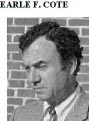
DR. EARLE F. COTE

DR. EARLE F.  COTE
Greenwich, Conn.

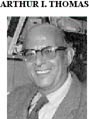
DR. ARTHUR I. THOMAS

DR. ARTHUR I.  THOMAS
Danbury, Conn.

DR. ROBERT S. FIELDS

DR. ROBERT S.  FIELDS
Stamford, Conn.

My Account

This is currently not available. Please check back later.

Please contact heather@jco-online.com for any changes to your account.